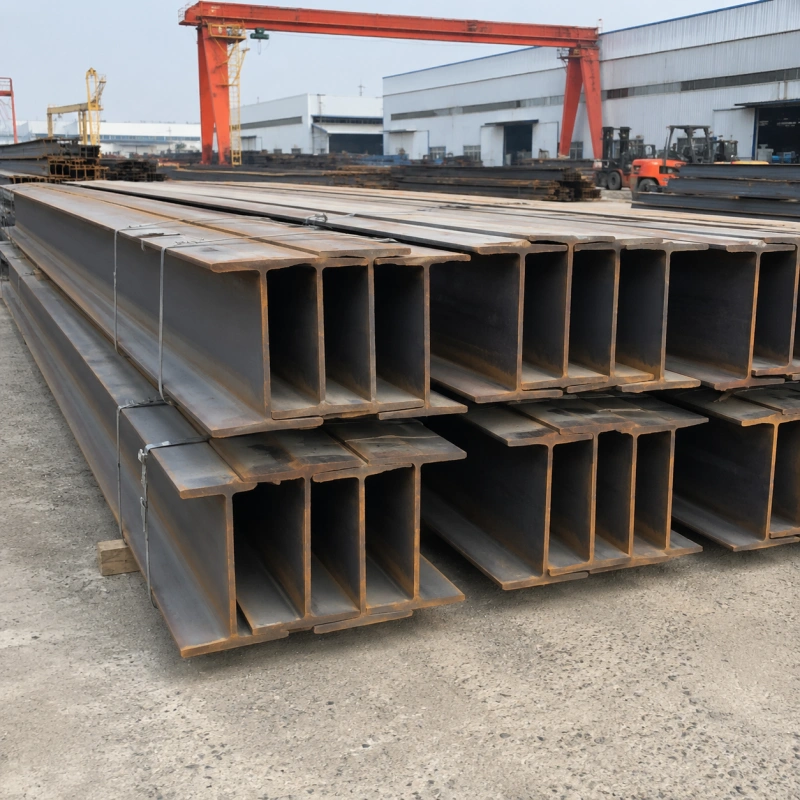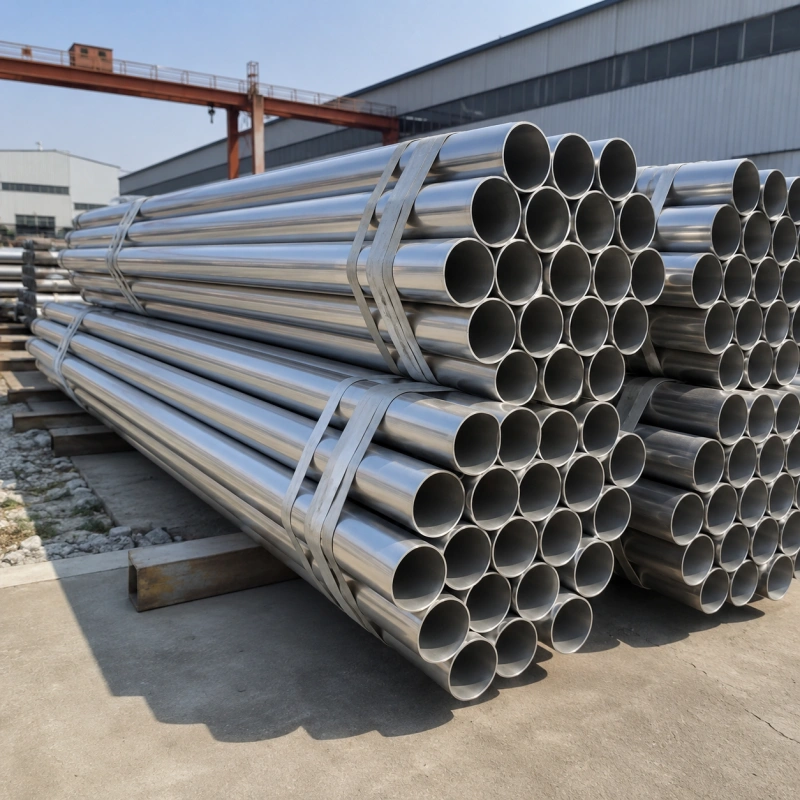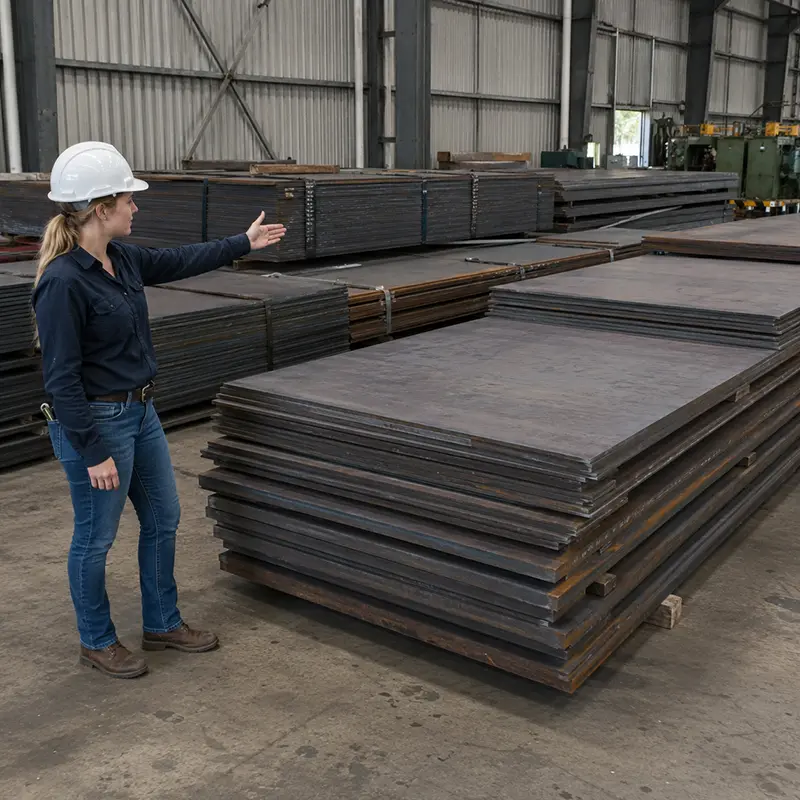
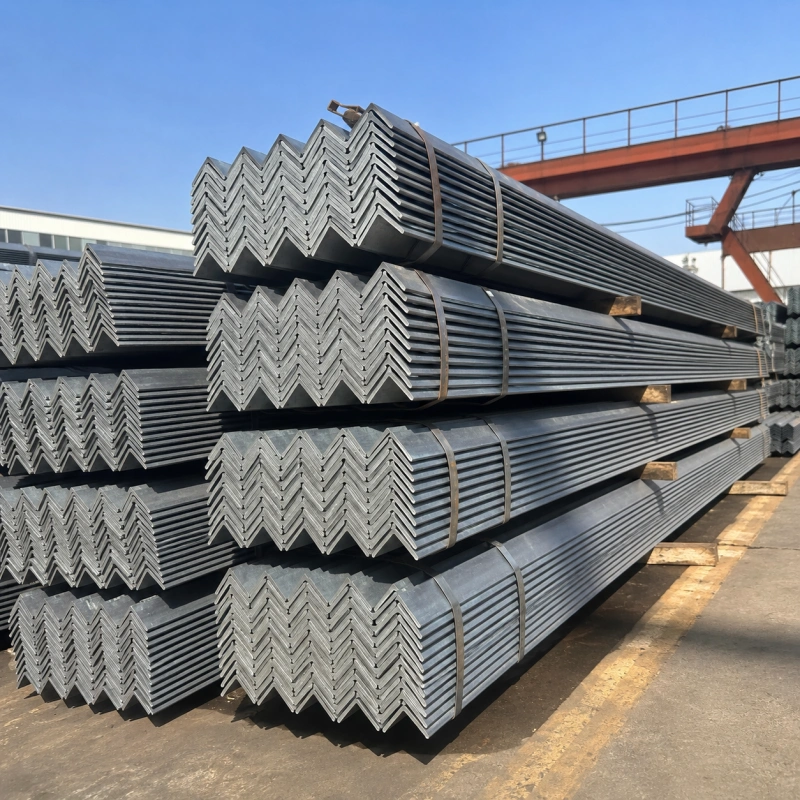
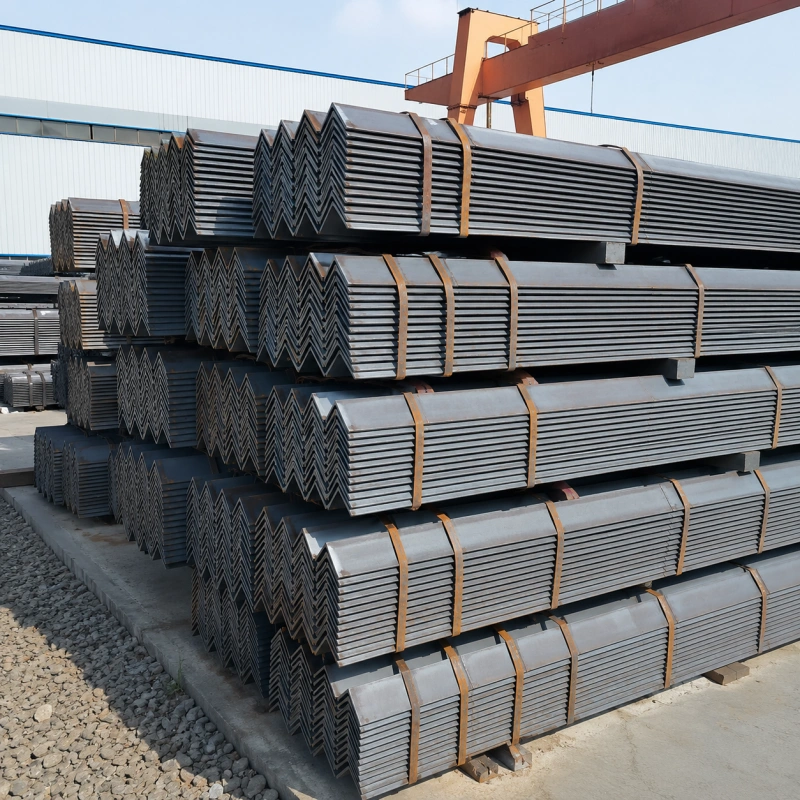
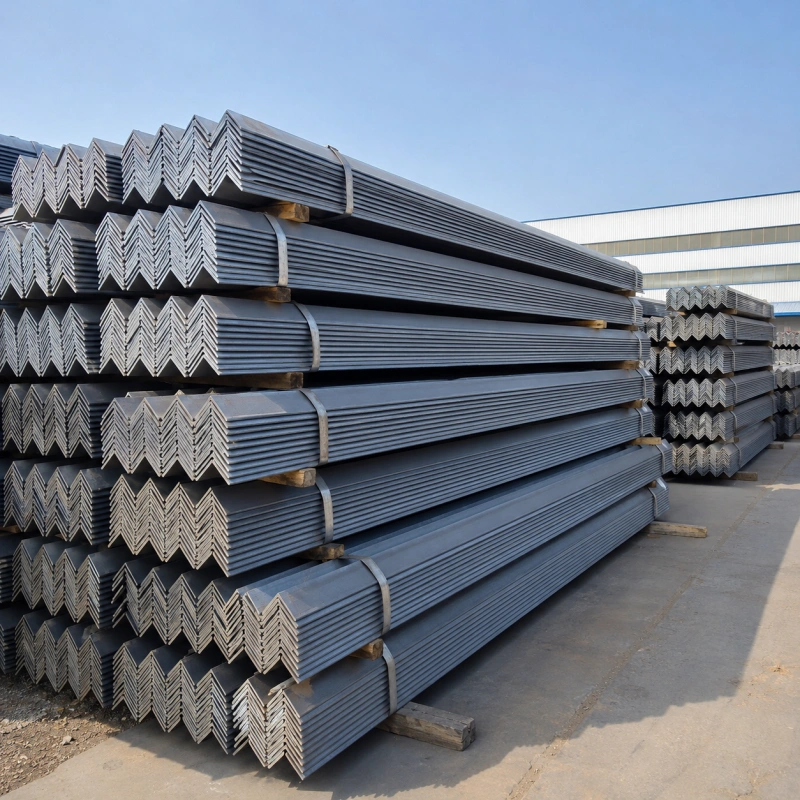
Equal and Unequal Angles – Multiple leg sizes and thicknesses for structural fabrication.
Structural Steel Grades – Q235B, Q355B, SS400, S355JR and ASTM A36 available.
Customized Processing – Cutting, drilling, punching, welding and galvanizing supported.
Multiple Surface Options – Black, shot-blasted, primer-painted and galvanized finishes.
Complete Export Documents – COO, MTC, export license and shipping documents available.
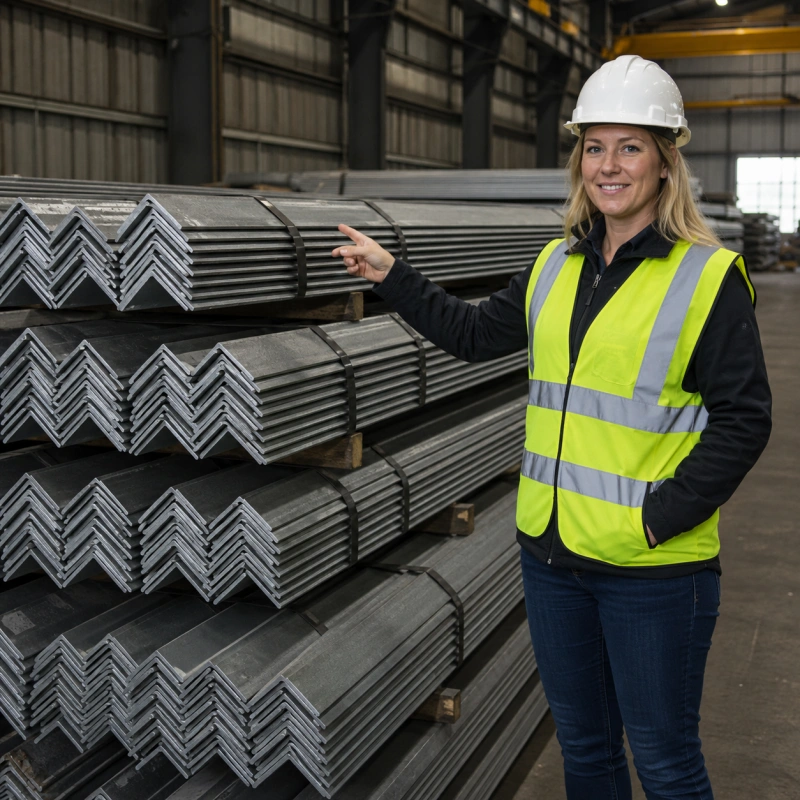
Carbon steel angle bar is a structural steel profile with an L-shaped cross section. It consists of two perpendicular legs and is available as equal angle steel or unequal angle steel according to the leg dimensions.
The L-shaped section provides practical rigidity and connection surfaces for welding, bolting and structural assembly. Carbon steel angles are widely used for steel buildings, machinery frames, supports, towers, bridges, platforms, warehouse structures, fencing and general metal fabrication.
Henan GDD supplies hot rolled carbon steel angle bars in multiple structural grades, section sizes, thicknesses, lengths and surface conditions. Cutting, drilling, punching, welding preparation, primer painting and hot dip galvanizing can be arranged according to customer drawings and project requirements.
| Item | Specification |
|---|---|
| Product Name | Carbon Steel Angle Bar / Mild Steel Angle / Structural Angle Steel |
| Section Type | Equal-leg Angle / Unequal-leg Angle |
| Common Grades | Q195, Q215, Q235B, Q355B, SS400, S235JR, S275JR, S355JR, ASTM A36, ASTM A572 Grade 50 or Customized |
| Applicable Standards | ASTM A6/A6M, ASTM A36, ASTM A572, EN 10025, EN 10056, JIS G3101, JIS G3192, GB/T 706 or Customer Specification |
| Equal Angle Size | 20 × 20 × 3 mm – 250 × 250 × 35 mm or Customized |
| Unequal Angle Size | 25 × 16 × 3 mm – 250 × 160 × 25 mm or Customized |
| Leg Width | 16 mm – 250 mm or Customized |
| Thickness | 3 mm – 35 mm or Customized |
| Length | 5.8 m, 6 m, 9 m, 11.8 m, 12 m or Customized |
| Production Method | Hot Rolled, Cold Formed, Plate Bent or Customized Fabrication |
| Surface Condition | Black Mill Finish, Pickled, Oiled, Shot Blasted, Primer Painted, Hot Dip Galvanized or Customized |
| Edge and End Condition | Mill End, Saw-cut End, Flame-cut End, Deburred End or Machined End |
| Dimensional Tolerance | According to Applicable Standard or Customer Drawing |
| Processing Service | Cutting, Drilling, Punching, Welding, Beveling, Bending, Painting and Galvanizing |
| Inspection | MTC, Dimension Inspection, Surface Inspection, Mechanical Test and Third-party Inspection |
| Applications | Steel Structures, Frames, Supports, Towers, Bridges, Platforms, Warehouses, Fencing and Machinery |
| Available Documents | MTC, Certificate of Origin, Export License Where Required, Commercial Invoice, Packing List, Bill of Lading and Customs Documents |
| Packing | Steel Strip Bundles, Waterproof Wrapping, Wooden Supports and Customized Seaworthy Export Packing |
| Trade Terms | EXW, FOB, CFR, CIF |
Available section sizes, dimensional tolerances and mechanical properties depend on the selected steel grade, production method and applicable standard. Final specifications should be confirmed through the purchase order, approved drawing and Mill Test Certificate.
Carbon steel angle bar is an L-shaped structural section manufactured mainly by hot rolling. The two perpendicular legs provide rigidity and convenient connection surfaces for welding, bolting and assembling steel structures.
Angle steel is also commonly called angle iron, mild steel angle, L-angle steel or structural angle bar. It can be supplied with equal leg widths or different leg widths depending on the structural design.
Carbon steel angle is frequently combined with steel plates, channels, H beams, I beams, pipes and other profiles to form complete structural systems.
Equal angle steel has two legs of the same width. It is commonly used for balanced structural connections, frames, supports, towers, platforms, shelves and reinforcement components.
Typical dimensions are expressed as leg width × leg width × thickness, such as 50 × 50 × 5 mm or 100 × 100 × 10 mm.
Unequal angle steel has two legs with different widths. It is suitable for asymmetric connections, structural reinforcement and applications requiring a larger connection surface on one side.
Typical dimensions are expressed as long leg × short leg × thickness, such as 75 × 50 × 6 mm or 100 × 75 × 8 mm.
Hot rolled angle steel is produced through rolling at elevated temperatures. It is widely available in structural sizes and provides economical performance for buildings, machinery and construction projects.
Cold formed angle steel is produced by bending or roll forming steel strip or sheet. It is generally used for lighter structures, frames, shelves and customized thin-wall applications.
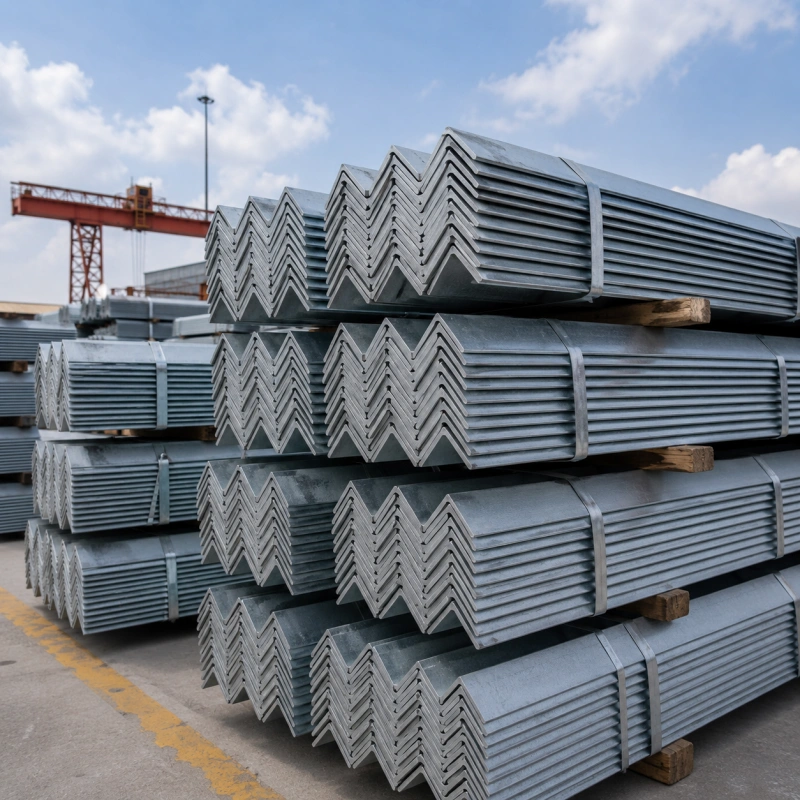
Carbon steel angles can be hot dip galvanized after rolling or fabrication. The zinc coating provides improved corrosion protection for outdoor structures, towers, fencing and utility projects.
Q235B is a widely used structural carbon steel grade with practical strength, weldability and economical cost. It is suitable for buildings, machinery frames, supports, platforms and general fabrication.
Q355B provides higher yield strength than Q235B and is commonly selected for structures requiring increased load-bearing capacity or reduced section weight.
ASTM A36 is widely used for structural frames, brackets, towers, industrial platforms, machinery and general engineering projects.
ASTM A572 Grade 50 provides higher minimum yield strength than ordinary mild steel and can be selected for bridges, industrial structures and demanding structural components.
SS400 is a commonly specified JIS structural steel grade used for construction, welded frames, machinery components and general steel fabrication.
S235JR and S355JR are widely specified under European structural steel requirements. Grade selection should be based on design strength, impact properties and the applicable project standard.
Carbon steel angle bars are used as columns, bracing members, frame components, connection members and reinforcement elements in steel buildings and prefabricated structures.
In machinery manufacturing, angle steel is used for machine bases, equipment frames, mounting brackets, protective structures and supporting assemblies.
Transmission towers, communication towers, solar mounting systems and utility structures use angle bars as main members, diagonal bracing and connection components.
Bridges, platforms, stairs and walkways use structural angles for cross bracing, edge reinforcement, handrail frames and support systems.
Other applications include warehouse racks, shelves, gates, fences, agricultural equipment, trailers, ship components and general welded fabrication.
The L-shaped cross section provides practical stiffness and convenient flat surfaces for welding, bolting and structural connections.
Multiple structural steel grades are available to meet different strength, loading and fabrication requirements.
Carbon steel angle provides a cost-effective solution for structural projects that do not require stainless steel corrosion resistance.
Angle steel can be cut, drilled, punched, welded, painted and galvanized into finished project components.
Equal and unequal angles are available in multiple leg widths, thicknesses and lengths for light, medium and heavy structures.
Standardized sections support efficient prefabrication, repeatable assembly and economical transportation to construction sites.
Equal angle steel has identical leg widths and is commonly selected for balanced loading, symmetric connections, bracing and general structural frames.
Unequal angle steel provides one long leg and one short leg. It can offer additional connection space or match structures where the geometry differs on each side.
The correct angle type should be selected according to structural calculations, connection layout, bolt spacing, loading direction and fabrication drawings.
Q235B is a general-purpose structural steel grade widely used for ordinary buildings, machinery frames, platforms and welded structures.
Q355B provides higher yield strength and can be selected for structures requiring higher load capacity, longer spans or more efficient section design.
The grade should be determined by the project engineer according to loading, connection design, operating temperature, welding requirements and applicable construction standard.
Carbon steel angle provides economical structural strength and reliable fabrication performance. It normally requires painting, galvanizing or another protective treatment in corrosive environments.
Stainless steel angle provides integral corrosion resistance and a cleaner metallic appearance but normally has a higher material cost.
Carbon steel angles are widely used for general buildings, machinery and infrastructure, while stainless steel angles are more commonly selected for food equipment, chemical facilities, marine projects and decorative structures.
Black angle steel retains the normal hot rolled mill surface. It is economical and suitable for indoor structures or products that will be painted or coated after fabrication.
Galvanized angle steel has a protective zinc coating and is suitable for outdoor construction, towers, fencing, solar supports and humid environments.
Hot dip galvanizing is often performed after cutting, drilling and welding so that fabricated surfaces and bolt holes receive zinc protection.
Black mill finish is the standard hot rolled surface and may include normal mill scale. It is suitable for general fabrication and subsequent surface preparation.
Shot blasting removes loose mill scale and surface contamination, preparing the steel for primer painting and protective coating.
Primer coating provides temporary corrosion protection during transportation, fabrication and construction.
Hot dip galvanizing creates a zinc coating that improves corrosion protection for outdoor and industrial structures.
Coating thickness, appearance, venting holes and drainage requirements should be confirmed according to the galvanized component design and project standard.
Henan GDD can arrange angle steel cutting according to customer-required installation lengths. Saw cutting, flame cutting and other suitable methods can be selected according to section size and tolerance.
Drilling, punching, slotting, beveling, welding, primer painting and hot dip galvanizing can be arranged for project-ready structural components.
Customers should provide drawings showing the steel grade, section size, length, hole diameter, hole position, cutting angle, tolerance, surface treatment and required quantity.
Carbon steel angle can be welded using common structural welding methods when the procedure is suitable for the selected grade, thickness and joint design.
Welding consumables, preheating requirements, heat input and distortion control should be determined according to the material grade and applicable fabrication standard.
Welded areas should be cleaned and receive appropriate paint, zinc-rich coating or galvanizing treatment when corrosion protection is required.
Selection should consider steel grade, equal or unequal section, leg width, thickness, length, load conditions, connection method and service environment.
Q235B, SS400, S235JR and ASTM A36 are commonly used for general structures. Q355B, S355JR and ASTM A572 Grade 50 may be considered for higher-strength applications.
Structural dimensions and load-bearing capacity should be confirmed by a qualified project engineer. Complete drawings and specifications should be provided for accurate quotation and fabrication.
Henan GDD can provide the technical, commercial and customs documents required for compliant international shipment according to the destination country and agreed contract terms.
Available documents can include the Mill Test Certificate, Certificate of Origin, export license where required, commercial invoice, packing list, bill of lading and customs declaration documents.
Product photographs, dimensional inspection records, processing photographs, packing photographs, container-loading photographs and third-party inspection reports can also be arranged.
Destination-specific certificates, chamber endorsement, legalization and customs requirements should be confirmed before order placement.
Henan GDD supplies carbon steel angle bars to steel structure companies, machinery manufacturers, tower factories, construction contractors, solar mounting producers and global steel distributors.
We support equal and unequal angles, multiple structural steel grades, customized lengths, cutting, drilling, punching, welding, painting and galvanizing.
MTC, Certificate of Origin, export license where required and complete commercial and shipping documents can be provided for compliant export.
From specification review and quotation to production, fabrication, inspection, packing, documentation and loading, our team provides one-stop export support for carbon steel angle orders.
Before shipment, inspection can include steel grade, leg width, thickness, length, angle accuracy, straightness, surface condition, hole position, quantity and package weight.
Chemical composition, tensile properties, yield strength, dimensional tolerances and third-party inspection can be arranged according to the applicable standard.
MTC, dimensional records, product photographs, processing photographs, packing photographs and loading photographs can be provided according to order requirements.
Carbon steel angles are normally packed in reinforced steel strip bundles with waterproof wrapping, wooden supports and identification labels.
Painted or galvanized angles can receive additional surface protection to reduce scratches, coating damage and moisture exposure during transportation.
Standard lengths can be loaded in containers. Extra-long sections or large project quantities may require open-top containers, flat racks or break-bulk shipment.
Shipment can be arranged under EXW, FOB, CFR or CIF terms. Commercial invoice, packing list, bill of lading, MTC and Certificate of Origin can be provided as agreed.
It is used for steel buildings, machinery frames, supports, towers, bridges, platforms, warehouses, fencing, solar structures and general fabrication.
Equal angle has two legs of the same width, while unequal angle has one long leg and one short leg for asymmetric structural connections.
Common grades include Q195, Q235B, Q355B, SS400, S235JR, S355JR, ASTM A36 and ASTM A572 Grade 50.
Yes. Hot dip galvanizing can be arranged for outdoor structures, towers, fencing, solar supports and projects requiring increased corrosion protection.
Yes. Standard and customized lengths can be supplied according to project drawings, container limits and order quantity.
Yes. Cutting, drilling, punching, slotting, beveling, welding, painting and galvanizing can be arranged.
ASTM A36 is widely used for general structural fabrication. Final suitability should be confirmed according to loading, connection design and the applicable engineering standard.
Yes. MTC, Certificate of Origin, export license where required, commercial invoice, packing list, bill of lading and other agreed export documents can be provided.
Please provide the grade, equal or unequal angle type, leg dimensions, thickness, length, surface treatment, processing drawing, quantity, destination port and required documents.
Yes. Third-party inspection can be arranged according to the inspection scope confirmed in the purchase contract.
Looking for Q235B, Q355B, SS400, S355JR or ASTM A36 equal and unequal angle steel for construction, machinery, towers or structural supports?
Send Henan GDD your required grade, section size, thickness, length, surface treatment, processing drawing, order quantity, destination port and document requirements. Our team will provide a professional quotation, packing plan and compliant export solution.