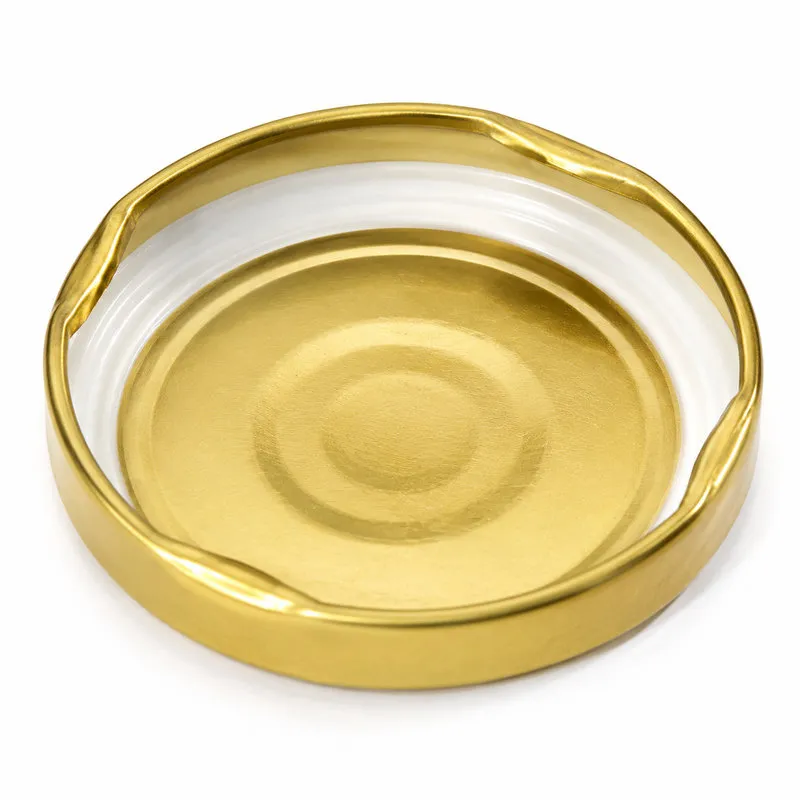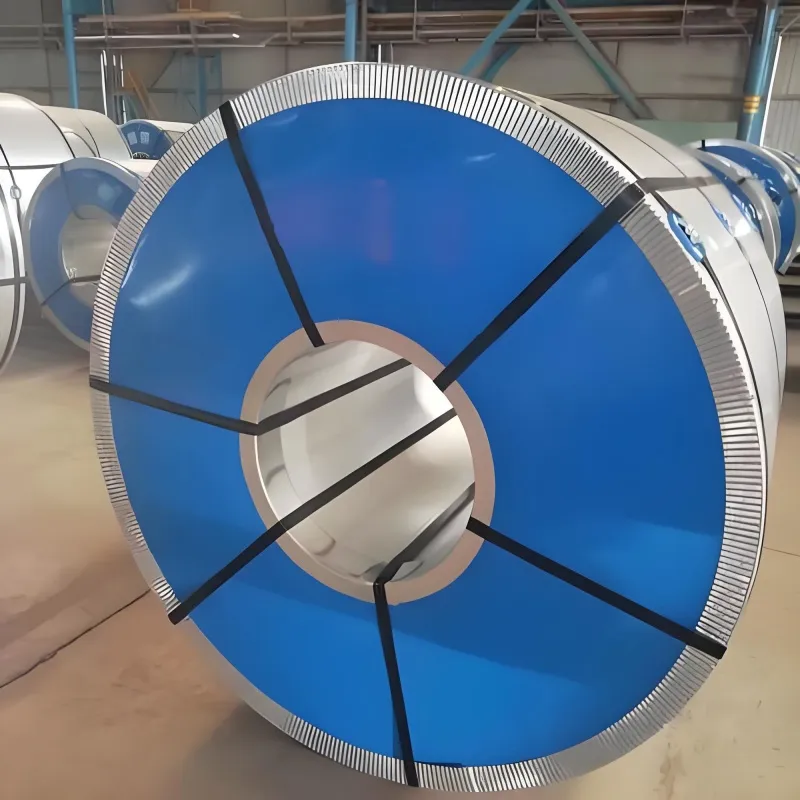
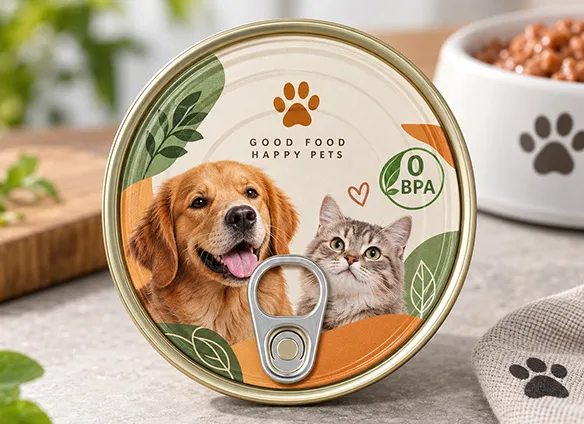
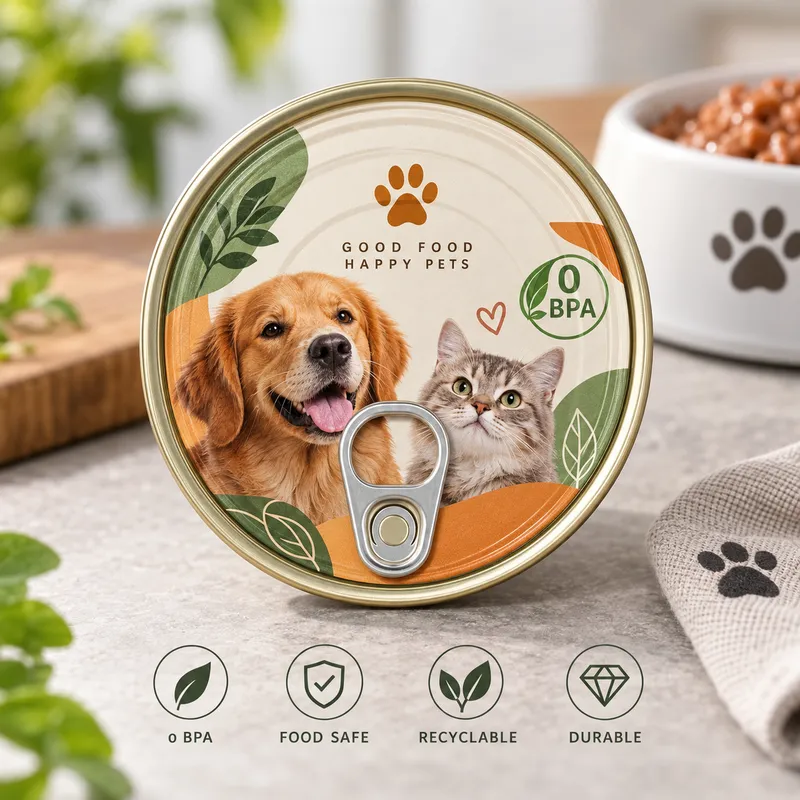
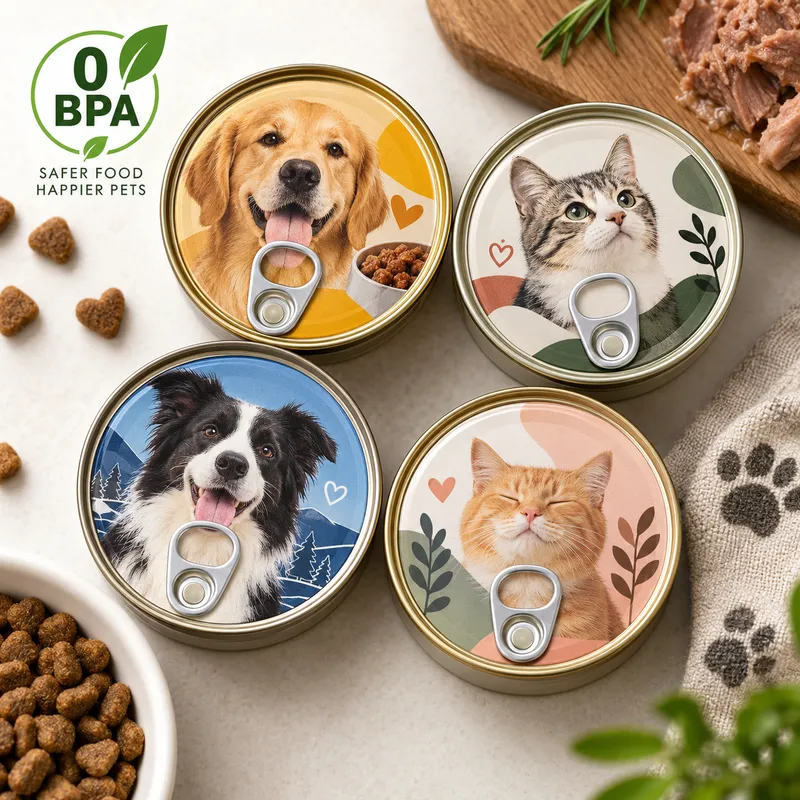
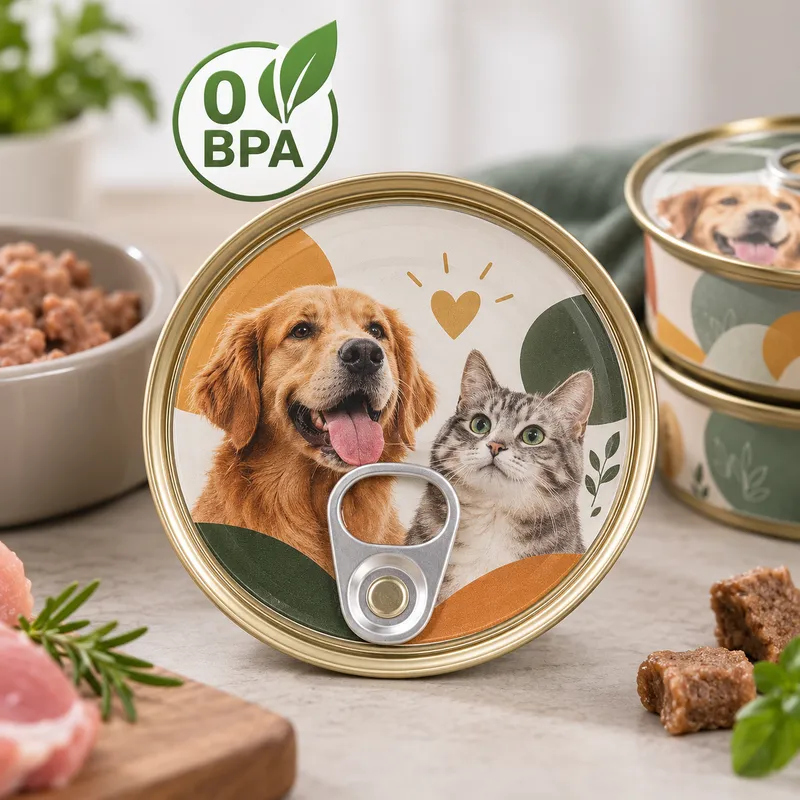
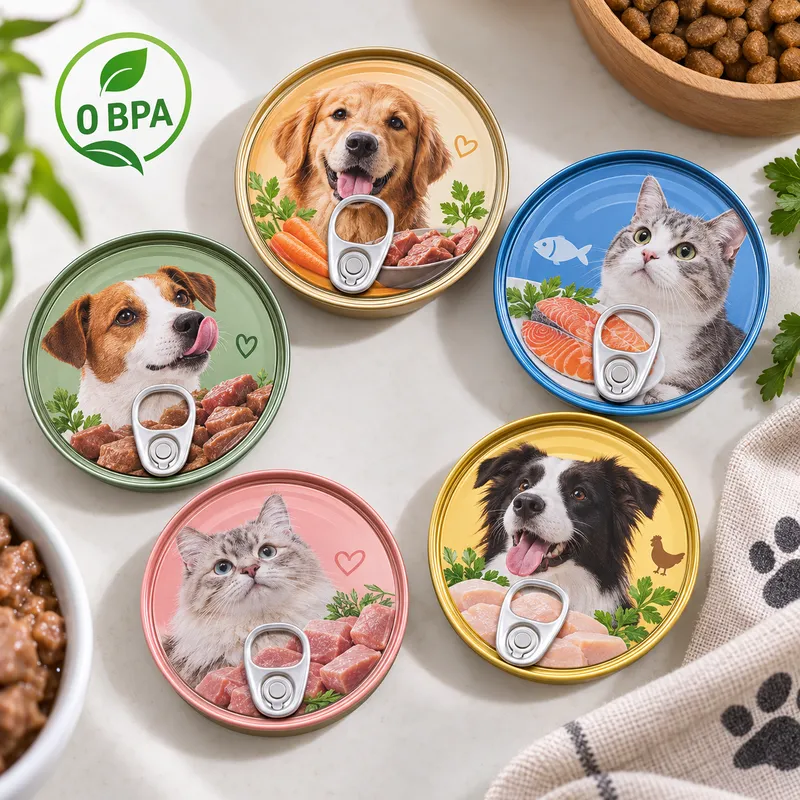
BPA-NI Internal Coating – Food-contact lacquer selected according to pet food and agreed BPA requirements.
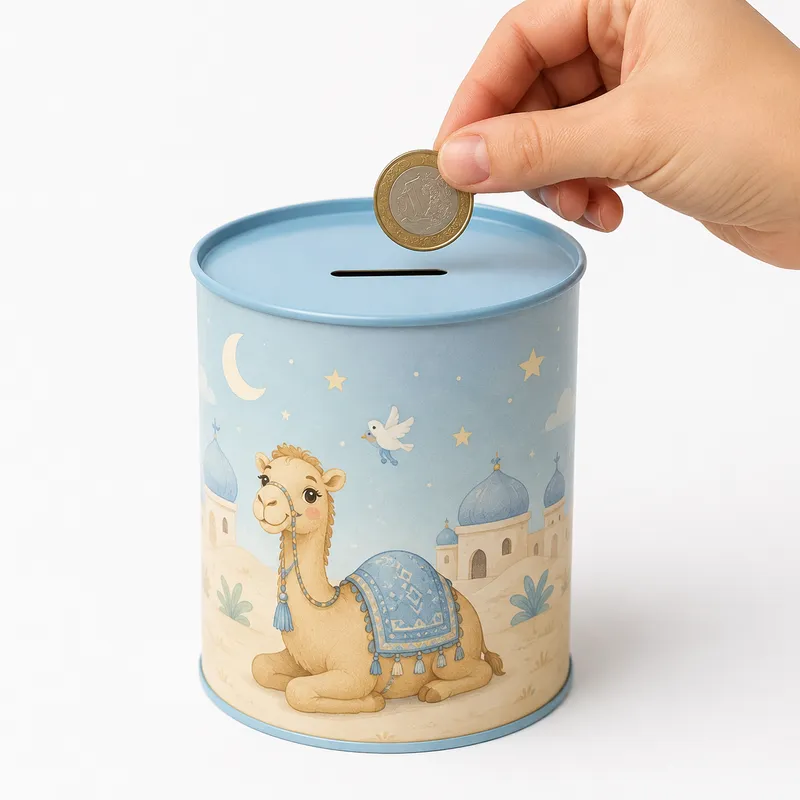
Custom Printed Exterior – Logos, brand colors, graphics and multilingual artwork can be printed on the lid.
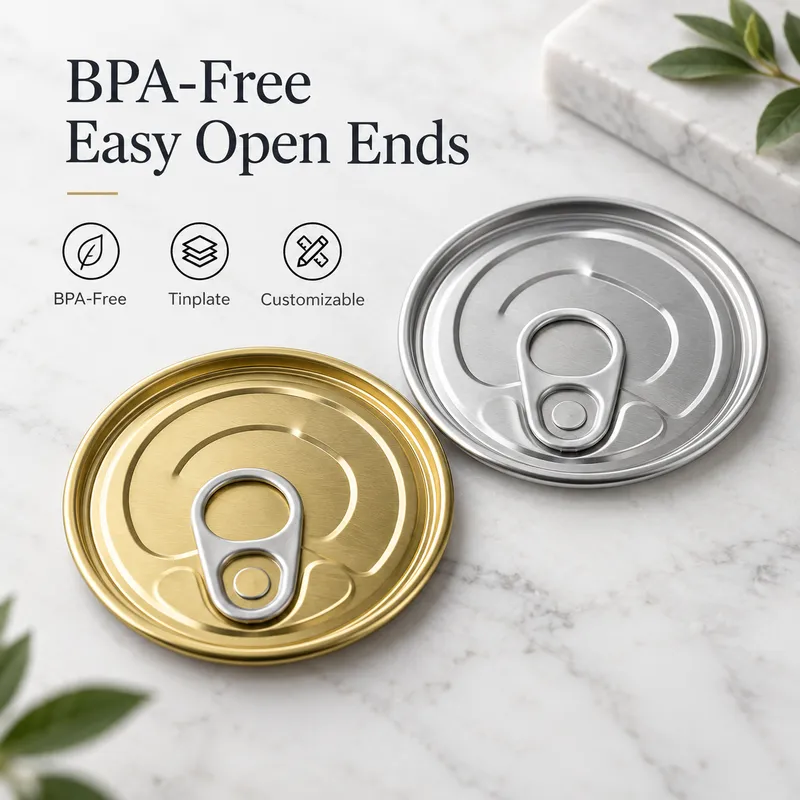
EOE & Standard Lid Options – Full-aperture Easy Open Ends and conventional tinplate ends available.
Retort-ready Specification – Coating, tinplate, compound and end structure matched to processing conditions.
Complete Export Documents – MTC, COO, test documentation and full shipping documents available.
BPA Free Printed Pet Food Tinplate Lid is designed for canned wet pet food where the closure must perform several functions at the same time: protect the contents, withstand thermal processing, form a reliable double seam, provide convenient opening where required and present the pet food brand clearly on the finished package.
Henan GDD supplies printed tinplate can ends for dog food, cat food and other wet pet food packaging. Available structures can include conventional can ends, full-aperture Easy Open Ends and project-specific closures according to the customer's existing can body and seaming equipment.
For BPA-sensitive projects, the internal food-contact lacquer and relevant external coating materials are selected according to the agreed BPA-NI or BPA-free specification. External graphics can include brand logos, pet illustrations, product names, flavor identification, feeding information or other approved artwork.
Because the lid forms part of a complete metal packaging system, the final specification should be reviewed together with the pet food formulation, can diameter, retort conditions, expected shelf life and double-seam requirements.
| Item | Specification |
|---|---|
| Product Name | BPA Free Printed Pet Food Tinplate Lid / Printed Pet Food Can End |
| Material | Electrolytic Tinplate / ETP / SPTE |
| Common Temper | T4, T5, DR8, DR9 or Customized According to End Design |
| Thickness | Selected According to Diameter, Temper, End Geometry and Opening Structure |
| Closure Type | Easy Open End / Full Aperture End / Conventional Can End / Customized Structure |
| Common End Series | 202, 209, 211, 300, 307, 401 and Other Sizes Subject to Tooling and Can Specification |
| Internal Coating | BPA-NI / Agreed BPA-free Food-contact Lacquer System |
| External Printing | CMYK / Spot Color / Logo / Brand Graphics / Product Identification / Customized Artwork |
| External Finish | Gloss Varnish / Matte Varnish / Clear Protective Overvarnish / Customized Finish |
| Print Color | CMYK, Pantone / Spot Colors or Customer-approved Color Reference |
| Pull Tab | Tinplate / Aluminum / Customized According to EOE Structure |
| Sealing Compound | Selected According to Can, Double Seam and Thermal Processing Requirements |
| Pet Food Types | Wet Dog Food, Wet Cat Food, Meat-based Pet Food, Fish-based Pet Food, Pâté, Chunks in Gravy and Other Canned Pet Foods |
| Thermal Processing | Retort / Sterilization / Other Thermal Process According to Approved Packaging Specification |
| Inspection | Dimensions, Printing, Coating, Score, Tab, Rivet, Compound, Opening Performance and Packing Inspection |
| Testing | BPA, Migration, Extractives or Other Relevant Testing According to Destination Market and Agreed Test Scope |
| Documentation | MTC, Coating Documentation, Certificate of Origin, Third-party Test Documentation Where Applicable, Export License Where Required and Shipping Documents |
| Packing | Protective Sleeve / PE Bag / Carton / Pallet / Seaworthy Export Packing |
| Trade Terms | EXW, FOB, CFR, CIF |
Exact lid diameter, thickness, temper, score geometry, coating, printing layout, sealing compound and curl dimensions should be confirmed against the customer's can body, double-seam specification and filling process before mass production.
BPA stands for Bisphenol A. It is an industrial chemical historically associated with certain polymer and epoxy-resin systems, including coating technologies used on some metal packaging.
In a tinplate can lid, the steel substrate itself is not normally the main source of BPA concern. The relevant issue is the chemistry of organic materials applied to the metal, such as internal lacquers, varnishes, certain coating systems and other packaging components.
This distinction is important because changing from a conventional coating to a BPA-NI lid normally involves changing and controlling the coating system rather than changing tinplate into a completely different base metal.
Tinplate provides a strong and highly formable substrate, but the finished can end still requires a coating system appropriate for the packed product.
Internal lacquer helps create a barrier between the packaged pet food and the metal surface. It can also support corrosion resistance during retort processing and storage.
The goal of a BPA-sensitive packaging project is therefore not to eliminate protective coating. It is to select a coating system that provides the required packaging performance while also meeting the customer's BPA specification.
Pet food manufacturers, private-label brands and retailers may specify BPA-NI or BPA-free packaging to control the chemistry of materials used in direct-contact packaging and to meet their own product, sourcing or market requirements.
Wet pet food can remain in contact with the internal can coating for an extended shelf life, and the package may also undergo high-temperature thermal processing before distribution.
For these reasons, the internal coating is treated as a functional part of the package rather than simply a decorative paint.
Requirements are not identical in every country. The destination market, brand specification and required analytical test scope should therefore be confirmed before production rather than assuming one universal global BPA standard for pet food packaging.
BPA-NI generally means Bisphenol A is not intentionally used in the relevant coating formulation or specified manufacturing system.
A claim such as analytically “BPA Free” can require a defined laboratory method, detection limit, sampling plan and acceptance requirement.
This is why Henan GDD recommends that customers specify whether they require BPA-NI documentation, a supplier declaration, third-party analytical testing or a combination of these requirements.
A printed and lacquered metal lid does not automatically contain intentionally added BPA. The result depends on the formulation of the selected coating, ink, varnish and other relevant materials.
For BPA-sensitive projects, production begins by selecting coating materials that meet the agreed BPA-NI or BPA-free specification rather than using a conventional coating and attempting to remove BPA later.
Manufacturing control then focuses on material identification, production-line changeover, coating application, curing and traceability.
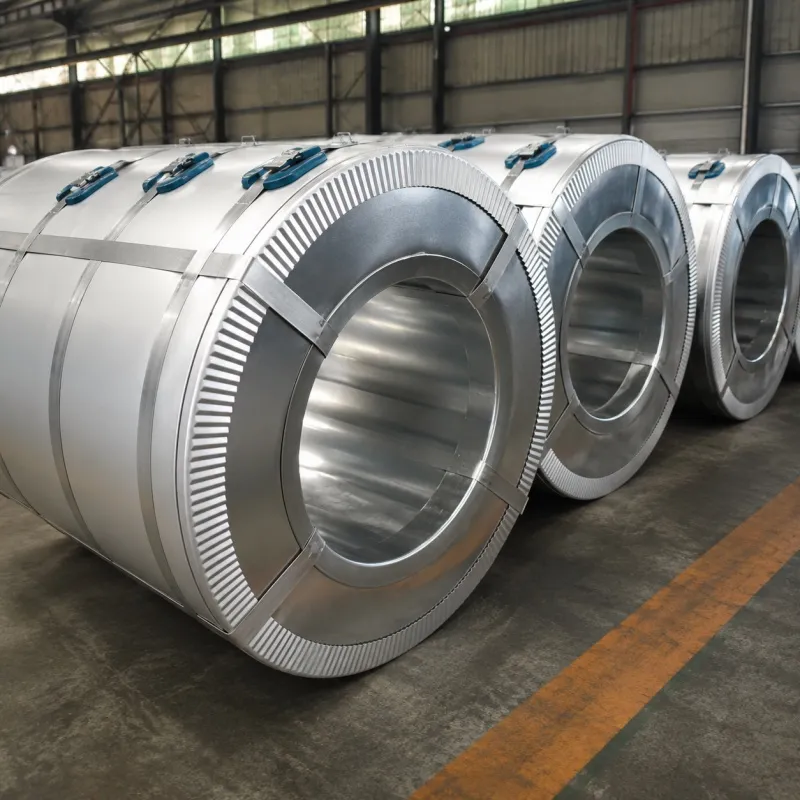
Tinplate thickness, temper and tin coating are selected according to the lid diameter and closure design.
Easy Open Ends can require different mechanical properties from conventional non-opening ends, so raw material is matched with the finished structure rather than selected only by thickness.
The internal coating system is selected according to the agreed BPA requirement and intended pet food formulation.
Meat-based, fish-based, oily, salty and sauce-containing products can place different demands on the coating.
The outside of the lid can be lithographically printed with customer-approved artwork.
Where the customer's BPA specification covers the complete printed closure system, ink, varnish and related coating requirements should also be identified before production.
Where coating or printing equipment has previously processed other material systems, appropriate cleaning and changeover procedures help reduce unintended carryover.
Material batches and production records are identified during the BPA-NI production run.
Internal lacquer is applied at the required coating weight to create continuous coverage over the metal surface.
Correct coating weight is important because chemical formulation alone cannot compensate for incomplete or poorly controlled coverage.
External graphics are printed according to approved artwork, with attention to logo position, color registration and the mechanical features of the finished lid.
For Easy Open Ends, artwork should account for the score panel, pull tab, rivet and formed areas so that important branding or text is not unintentionally distorted or hidden.
A protective outer varnish can be applied over printed graphics to improve resistance to handling and forming damage.
Gloss or matte appearance can be selected according to the customer's packaging design.
Lacquer, ink and varnish layers are cured according to their specified production conditions.
Correct curing is important for adhesion, hardness, chemical resistance and performance during subsequent lid forming.
Printed and coated tinplate is blanked and formed into the required can-end geometry.
For EOE products, further forming creates the opening panel, score, rivet and pull-tab assembly.
The appropriate sealing compound is applied around the curl before final inspection and packing.
Product identification connects the finished production lot with the corresponding material and coating records.
The coating on the inside and printing on the outside of the lid should not be treated as the same layer.
Internal lacquer is selected primarily for compatibility with the packed pet food and processing conditions.
Exterior ink and overvarnish are selected primarily for branding, color, visual appearance and resistance to handling.
For projects with strict BPA requirements, both sides should be reviewed according to the customer's definition and test scope.
Canned pet foods can contain meat, fish, gravy, oils, fats, minerals, salt and other ingredients that create different packaging environments.
A lacquer suitable for one formulation should not automatically be assumed to be suitable for every pet food.
The buyer should therefore provide information about the filling type and thermal process when a new lid and coating system are being developed.
Wet dog food can be packed as pâté, loaf, chunks, meat pieces or products in gravy.
The internal coating should be selected according to the formulation, fat content, salt, processing temperature and expected storage conditions.
For easy-opening cans, end diameter, score configuration and pull-tab structure also need to match the selected can format.
Wet cat food commonly includes meat, fish or mixed-protein formulations and may contain oils, gravy or jelly.
Fish-based formulations can create different packaging conditions from relatively mild meat-based products, so coating compatibility should be validated for the actual filling.
Printed top surfaces can be customized to identify flavor, protein source or product series directly on the can end.
Full Aperture Easy Open Ends allow most of the central panel to be removed by pulling the tab.
This structure is practical for pâté, meat chunks and other pet foods where consumers need broad access to the contents.
Score geometry and opening force must be controlled so that the panel opens conveniently while retaining sufficient strength during retort, storage and transportation.
Not every pet food can requires a ring-pull lid.
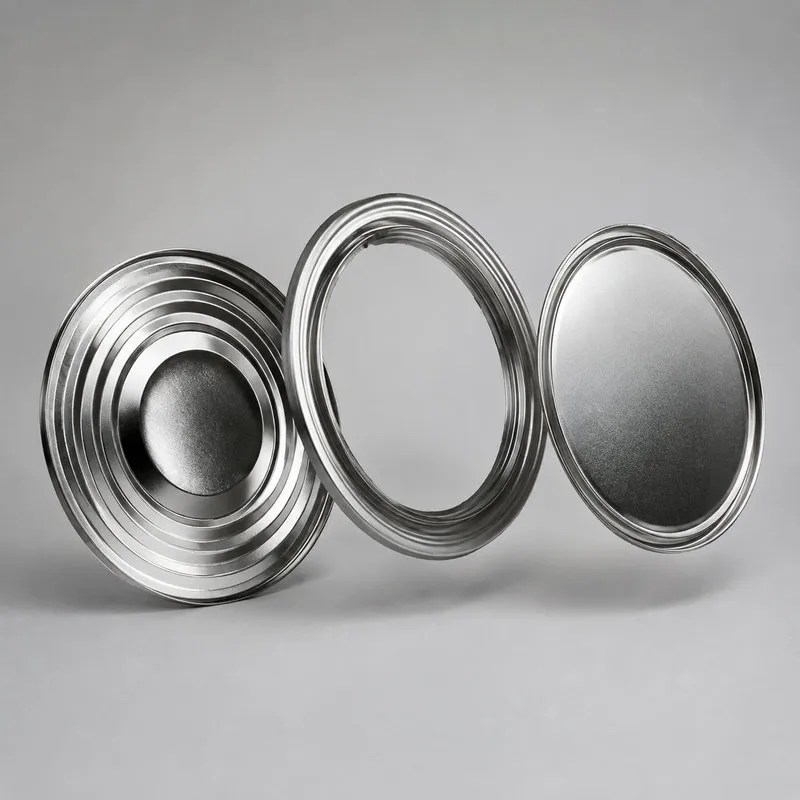
Conventional tinplate ends can also be printed and coated with BPA-NI systems where the can format uses a separate opening method or where the printed end serves primarily as a branded top or bottom closure.
Structure, curl and compound should still match the can-body and double-seam specification.
Printed tinplate lids give pet food brands another visible surface for product identification.
Artwork can include brand logos, dog or cat illustrations, product names, protein varieties, color coding, promotional graphics or multilingual information.
CMYK printing can reproduce detailed graphics, while spot colors can be used where brand-color consistency is important.
Final artwork should always be approved on the actual lid template rather than using only a generic circular graphic.
An EOE contains mechanical features that reduce the uninterrupted printable area.
The pull tab, score line, rivet and embossed or formed areas should be considered when placing logos and text.
Important branding elements should remain within an approved print-safe area so they are not covered by the tab or interrupted by the score profile.
Before mass production, the buyer should approve the final artwork orientation and registration reference.
CMYK is useful for photographs, pet illustrations, gradients and complex multicolor artwork.
Spot colors are useful where the customer needs more controlled reproduction of a specific brand color.
A combination of CMYK and spot colors can be considered depending on artwork complexity and printing requirements.
Protective overvarnish can influence the final appearance of the printed metal surface.
Gloss finishes produce a brighter reflective appearance, while matte finishes provide a softer and less reflective presentation.
Finish selection is primarily related to branding and package design but must also remain compatible with the forming process.
Many canned wet pet foods undergo thermal sterilization after seaming.
During this process, the lid is exposed to elevated temperature, moisture and internal container pressure.
Internal coating adhesion, external print performance, sealing compound and end structure should remain suitable under the customer's actual or representative retort conditions.
A visually attractive lid that has only been evaluated at room temperature is not sufficient for a commercial retorted pet food application.
BPA requirements and package-performance requirements are separate technical questions.
A coating can satisfy a BPA-NI requirement but still require further validation for a particular pet food formulation, sterilization cycle or shelf-life target.
This is why new packaging should be evaluated as a complete system rather than approving the lid only on a BPA declaration.
Easy opening depends heavily on the score formed around the removable panel.
The score must retain sufficient residual metal to withstand processing and distribution while still allowing controlled tearing when the pull tab is lifted.
Tinplate strength, material thickness and score geometry therefore need to be considered together.
The pull tab applies force to the scored panel through a formed rivet.
Tab shape, rivet integrity and panel geometry influence opening performance.
Printed artwork should also take the tab position into account so that important branding remains visible after assembly.
A printed lid that looks correct is not automatically suitable for an existing filling line.
Curl dimensions, countersink, metal thickness, sealing compound, can flange and seaming-roll setup all influence final double-seam geometry.
For supplier replacement projects, customers are encouraged to provide the current lid drawing, can dimensions, seam specification or physical samples.
Trial seaming and seam teardown evaluation should be completed before full-scale commercial use with a new end specification.
Sealing compound is applied inside the curl and contributes to the hermetic double seam after the lid is attached to the can body.
Compound type and application amount should be matched with the end structure, can body, seaming conditions and thermal process.
Where the customer has a broad restricted-substance specification, sealing compound requirements should also be included in the project review.
A typical wet dog food manufacturer may require a full-aperture EOE printed with the brand logo and a different color for each recipe.
The project begins by matching the existing can diameter and seaming specification. The internal BPA-NI lacquer is then reviewed against the meat-based filling and retort process.
External artwork is positioned around the pull tab and score panel so that the main brand identity remains visible on the finished can.
A cat food producer packing fish-based products may place particular attention on internal coating compatibility because the formulation can contain oil, salt and other components that affect the package environment.
The buyer supplies the current lid specification and processing conditions so that material, lacquer, compound and opening structure can be reviewed together.
Printed flavor identification allows several recipes using the same physical lid size to be differentiated by artwork.
A private-label manufacturer may use the same tinplate lid structure for several customer brands while changing exterior artwork, colors and language.
Standardizing the mechanical end structure can simplify filling-line setup while printing creates visual differentiation between brands.
Each approved artwork is controlled separately to reduce the risk of brand or flavor mixing during production.
A pet food can manufacturer changing coating systems may provide the current can end, double-seam data, filling formulation and retort conditions.
The new lid is not approved solely because the dimensions match. Coating compatibility, printing, end forming, compound, seaming and thermal-process performance are also reviewed.
These examples describe typical project workflows. Customer names, confidential prices and proprietary artwork are not published without authorization.
Once a printed lid has been approved for a filling line, consistency becomes a major purchasing priority.
Buyers typically monitor print color, logo registration, coating appearance, end dimensions, score quality, pull-tab attachment, compound distribution, opening performance and packing condition.
BPA-sensitive programs may also require consistent coating identification, supplier documentation and lot traceability between repeat orders.
Printed pet food lids are inspected against approved artwork and production references.
Checks can include color consistency, registration, logo position, visible scratches, ink defects, varnish coverage and contamination.
For Easy Open Ends, print position is also reviewed relative to the tab, rivet and score panel.
Internal lacquer inspection focuses on coverage, surface condition and conformity with the approved coating specification.
Production records help identify the relevant coating system and manufacturing lot.
Where additional testing is required, representative products or materials can be submitted according to the agreed sampling and laboratory scope.
A BPA-NI declaration and an analytical BPA test are not the same form of evidence.
Where the customer requires analytical confirmation, the test method, detection or quantification limit, sample type and acceptance criteria should be defined before testing.
Third-party BPA, migration, extractives or other packaging-related testing can be discussed according to the target market and project requirements.
Test documentation should always be interpreted within the actual product, coating and report scope rather than extended automatically to unrelated materials or production configurations.
Relevant third-party test documentation against applicable FDA 21 CFR 175.300 requirements can be provided according to the corresponding coating, product and report scope.
Such documentation relates to testing or evaluation against referenced food-contact coating requirements. It should not be described as an FDA-issued certification of the finished pet food lid.
Customers should also confirm whether their animal-food packaging program has additional destination-market or company-specific requirements.
The tinplate substrate can be supported by corresponding mill documentation according to the supply route and order requirements.
MTC information can include material grade, thickness, temper, tin coating and production identification depending on the supplied material.
The MTC primarily supports the metal substrate. Coating, ink and BPA-related requirements should be supported separately through relevant supplier and test documentation.
Traceability helps connect finished pet food lids with production records, tinplate batches, coating systems, printing artwork and inspection information.
This is particularly useful for private-label programs and customers managing multiple recipes, brand designs or packaging specifications.
Specific traceability-document requirements should be agreed before production.
Independent third-party inspection can be arranged according to the agreed order scope.
Inspection can include product dimensions, printing, coating identification, quantity, packing, documentation and loading verification.
Laboratory testing can be incorporated separately where required, with sampling methods and acceptance criteria agreed in advance.
Henan GDD supports international pet food can-end shipments with technical, commercial and customs documentation prepared according to contract and destination requirements.
Available documents can include MTC, Certificate of Origin, coating documentation, third-party test reports where applicable, export license where required, commercial invoice, packing list, bill of lading and customs declaration documents.
Product photographs, artwork-confirmation records where agreed, inspection photographs, packing photographs and container-loading photographs can also be supplied.
Destination-specific animal-food packaging requirements, labeling requirements, conformity documentation or special import documentation should be confirmed before order placement.
Printed can ends require protection against scratches, deformation, contamination and moisture during international transportation.
Finished lids can be stacked in protective sleeves or bags and packed into reinforced export cartons before palletizing.
Packaging should prevent excessive movement that could damage curls, tabs, printed surfaces or formed panels.
Lot numbers, size, artwork identification and shipping marks can be added according to the agreed packing specification.
Henan GDD supplies tinplate raw materials, printed tinplate and finished metal packaging components for international packaging customers.
For printed pet food lids, we can coordinate tinplate selection, BPA-NI coating requirements, metal printing, end forming, pull tabs, sealing compounds, inspection and export packing according to the agreed specification.
Customers replacing an existing lid can provide physical samples, end drawings, seam specifications, pet food formulation information and retort conditions for technical comparison.
Custom external printing allows the same approved lid structure to support different pet food brands, recipes and product series where appropriate.
MTC, Certificate of Origin, export license where applicable, coating documentation and third-party test documentation can be provided according to contract and report scope.
BPA, or Bisphenol A, is a chemical historically associated with certain resin and coating systems, including some coatings used in metal packaging.
The BPA concern in a metal can lid is primarily related to relevant organic coatings, varnishes, inks and other applied materials rather than the steel and metallic tin substrate itself.
Pet food companies may specify BPA-NI or BPA-free packaging to control food-contact packaging chemistry and meet destination-market, retailer, brand or internal procurement requirements.
Requirements vary by country, product and buyer. The destination market and customer's exact compliance specification should therefore be confirmed before production.
The production system starts with suitable BPA-NI or agreed BPA-free coating materials, followed by controlled material identification, line changeover, coating and printing application, curing and lot traceability. Analytical testing can be added where the finished-product claim requires it.
Yes. Logos, pet graphics, product names, flavor identification and custom colors can be printed according to approved artwork and available print areas.
Yes. Full-aperture and other Easy Open End structures can be supplied according to can size, tooling and the customer's seaming specification.
Not automatically. Coating suitability should be reviewed according to the actual filling formulation, oil, salt, protein system, retort process and required shelf life.
Relevant third-party testing can be discussed according to the required market, test method, detection limit and product scope.
Please provide the lid diameter or series, EOE or conventional-end requirement, can-body specification, pet food type, retort conditions, BPA or coating requirement, artwork, quantity, destination market, destination port and required documents.
Looking for custom printed BPA Free Tinplate Lids for wet dog food, wet cat food, pâté, meat, fish or other canned pet food products?
Send Henan GDD your lid size, can specification, pet food type, EOE or conventional closure requirement, coating specification, retort conditions, printing artwork, quantity, destination market and required documentation.
If you are replacing an existing supplier, you can also send your current lid drawing, physical sample, seam specification, coating declaration or test report. Matching the complete metal, coating, print, closure and seaming system is more reliable than selecting a new lid only by nominal diameter.