
Why would a food can need two layers above its contents? For milk powder, infant formula, coffee and other products used over several days or weeks, the first opening and subsequent servings have different needs. A peelable foil membrane protects the unopened pack; a removable outer lid lets the customer cover it again after opening. A formed tinplate ring connects the membrane to a compatible can body. This three-component closure combines two distinct functions rather than merely adding another lid.
Standard double-seamed end: A plain metal end is mechanically joined to the can body and normally opened with a can opener. It suits many conventional food cans, but the removed or cut end does not provide a convenient reusable cover.
Scored easy-open end (EOE): A pull tab opens a scored metal panel without a tool. It is widely used for fish, vegetables, fruit, meat and pet food. A correctly specified and seamed EOE can protect the unopened food effectively; opening the scored panel is irreversible. See GDD Metal’s tinplate easy-open ends.
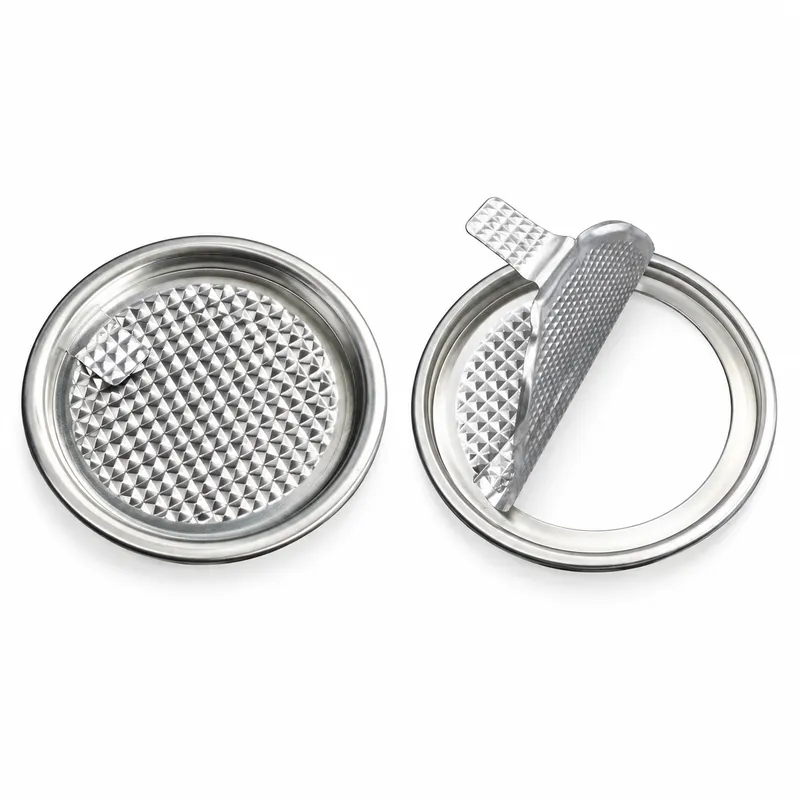
Peel-off membrane end: A flexible foil laminate is heat-sealed to a prepared metal ring, which is double-seamed to the can. The consumer lifts a tab and removes the membrane; the ring remains attached. It is a practical opening format for suitably qualified dry products and other applications subject to testing.
Reusable slip-on, press-fit or twist-off lid: This separate outer cap can be removed and replaced. A twist-off cap requires a matching threaded or lugged can neck; many powder cans instead use a press-fit cover. A single removable cap without a validated liner or inner seal must not be assumed to provide the unopened package’s required barrier or tamper evidence.
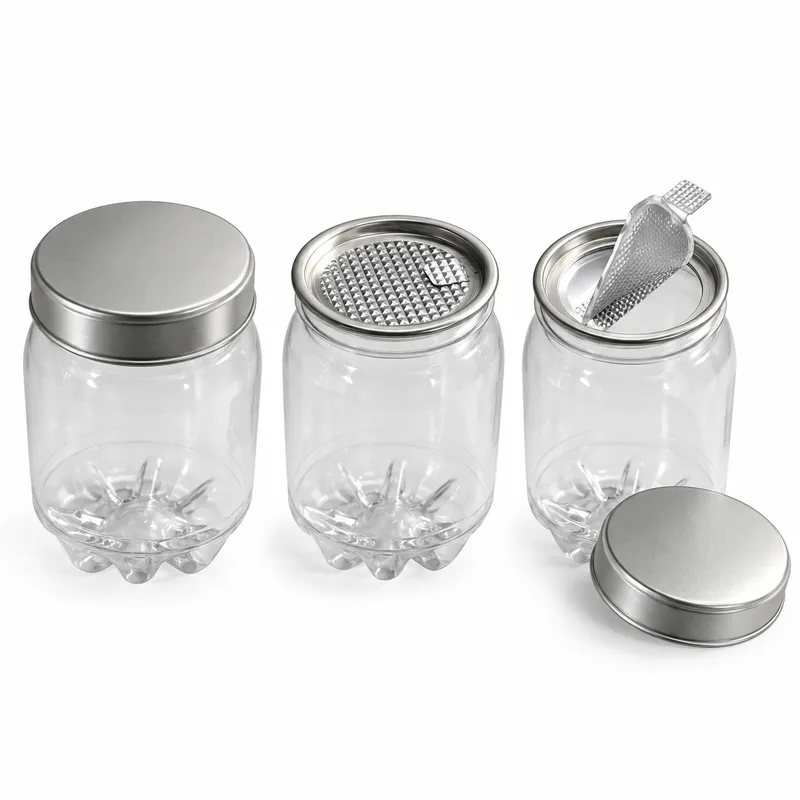
The metal ring is stamped and curled to match the can’s double-seam profile. A food-contact aluminum-foil laminate, including its product-facing layer and peelable heat-seal layer, is sealed continuously to the ring. The filling line joins the ring end to the can with a controlled double seam. The removable outer cap sits above the foil and must clear the pull tab. Depending on the design, it slips on, presses into place or engages a specially formed thread or lug.
Before first opening, an intact membrane and sound seam provide a barrier against the specified moisture and gas exposure and make first opening visible. After the foil is peeled away, the outer cap helps shield the opening from dust and handling during repeated use. It cannot recreate the original hermetic seal or automatically preserve the unopened shelf life. Follow the food producer’s instructions for storage and use after opening.
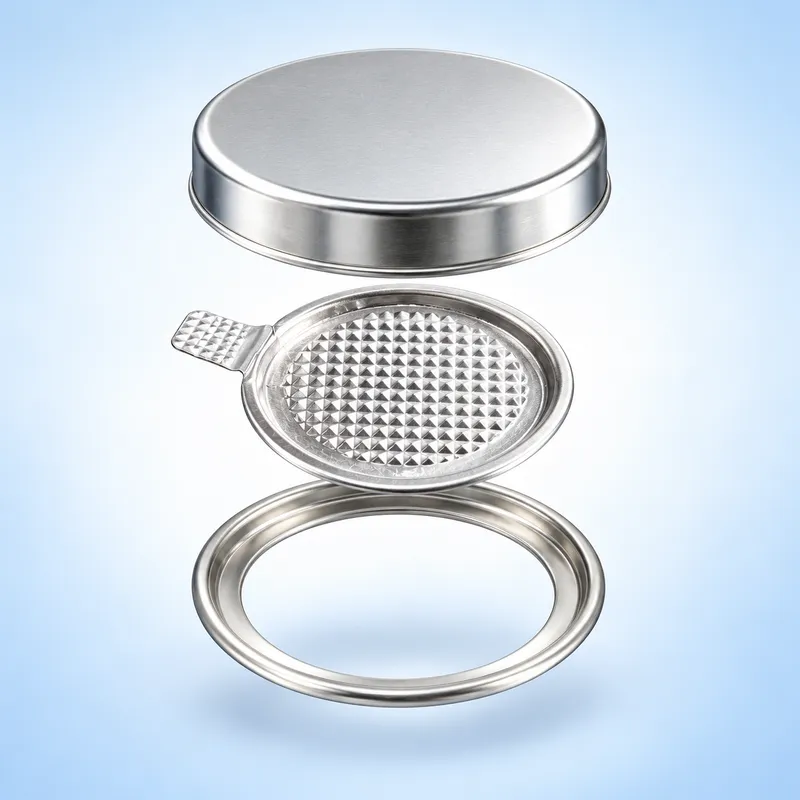
Powdered foods can be sensitive to moisture pickup, clumping, oxidation and foreign odors. A qualified foil-and-seam system supports the unopened product’s barrier specification, while a full-width peel opening makes it easier to scoop the powder. Consumers can see whether the membrane has been broken at first use. The outer cap then serves the repeated opening and closing routine and offers additional space for branding.
Compared with a standard metal EOE, the peel-off membrane avoids tearing away a rigid scored metal panel and can provide a broad access opening. The real tradeoffs are additional laminate selection, heat-seal process control, peel-force testing and another cap component. Compared with a removable cap alone, the foil supplies a separate primary seal and visible first-opening evidence. However, a screw cap with a separately engineered induction liner or other qualified inner seal may also meet similar needs; performance must be compared as a complete package, not by the cap name.
This arrangement is especially relevant for infant formula, milk powder, protein powder, coffee, tea, cocoa and dry snacks when the material system is approved for the particular product. Wet, acidic or retorted foods require their own membrane, coating and thermal-process validation. A dry-food peel-off lid should never be described as retort-ready without test evidence.
Continuous aluminum foil is an effective barrier to light, oxygen and water vapor while remaining thin enough to make a flexible peelable panel. It can be embossed or printed and combined with a pull tab. In practice, the membrane is a multilayer laminate, not bare aluminum touching every food. Its heat-seal coating and product-facing layer must suit the packed contents, contact time, filling temperature and destination market.
The foil’s theoretical barrier is only one part of the result. Pinholes, folds, bond defects, an incomplete ring seal or an out-of-spec double seam can compromise the finished package. The design team should test actual seal strength, peel force, leakage, moisture and oxygen barrier, and shelf life as appropriate. The rigid tinplate ring supplies the seaming geometry and a consistent landing surface for the foil, while the tinplate overcap is durable enough for repeated handling.
Food-grade is a claim about a specified finished food-contact system and intended use, not a universal grade assigned to every tinplate coil. Tinplate is cold-reduced steel with an electrolytic tin coating; ISO 11949:2026 covers specified electrolytic tinplate sheets and coils. For a peel-off end, buyers must also evaluate the ring lacquer, foil laminate, adhesive or heat-seal layer, sealing compound and any surface that may contact food. View GDD Metal’s ETP tinplate sheet supply options.
BPA concerns usually relate to certain organic coating chemistries rather than the steel or metallic tin itself. For EU projects, Regulation (EC) No 1935/2004 sets the general food-contact framework, Regulation (EC) No 2023/2006 addresses good manufacturing practice, and Regulation (EU) 2024/3190, as corrected by Regulation (EU) 2026/250, places restrictions on BPA and certain other bisphenols in relevant food-contact materials. Transition provisions and limited exceptions are application-specific. For the US, 21 CFR 175.300 can be relevant to qualifying resinous and polymeric food-contact coatings; it is not an FDA-issued certification of an entire can lid.
“Zero BPA,” “BPA-free” and “BPA-NI” should not be used interchangeably without a defined claim and evidence. BPA-NI means no intentionally added BPA; an analytical “not detected” result also needs its method and detection limit. A metal MTC records agreed substrate properties and traceability, but it does not establish the finished membrane’s chemical or migration compliance. Request the actual coating and laminate declarations, applicable migration or extractives reports, and testing that matches the intended food and conditions.
These are selection points and reference formats, not a promise that every size or material combination is in stock. Approve the final drawing and physical samples on the customer’s filling and seaming equipment.
| Parameter | Design / Ordering Point |
|---|---|
| Construction | Reusable tinplate overcap + peelable foil laminate + seamed tinplate ring |
| Outer-cap fit | Slip-on, press-fit or twist-off with matching threaded/lugged neck |
| Reference end formats | #300 (about 73 mm), #307 (about 83 mm), #401 (about 99 mm); exact curl and tooling by drawing |
| Metal and membrane | ETP/SPTE ring and cap gauges by forming trial; foil laminate and food-contact layer specified separately |
| Surface / coating | Plain, printed or embossed; appropriate food-contact lacquer; documented BPA-NI option by agreement |
| Performance checks | Seam teardown, foil bond/peel force, leak and barrier testing, repeat cap fit, migration/extractives as applicable |
| Documents | Applicable metal MTC, food-contact test report for its tested sample, coating/laminate declarations, export license where required |
Henan GDD Metal Materials Co., Ltd. supports material selection, design coordination, sample development and supply of tinplate ring peel-off ends, compatible can components and reusable outer lids. For a purpose-built twist-off design, see our three-part tinplate lid. We can coordinate MTCs for relevant metal inputs, applicable food-grade tinplate test reports within their stated sample and test scope, coating/laminate documentation, certificates of origin and export license documentation where required.
Send the can-mouth drawing or physical sample, packed product, destination market, filling and heat-treatment details, proposed cap opening method and required artwork through our contact page. We can then review the ring curl, foil seal, cap engagement, tooling and trial plan together before volume production.