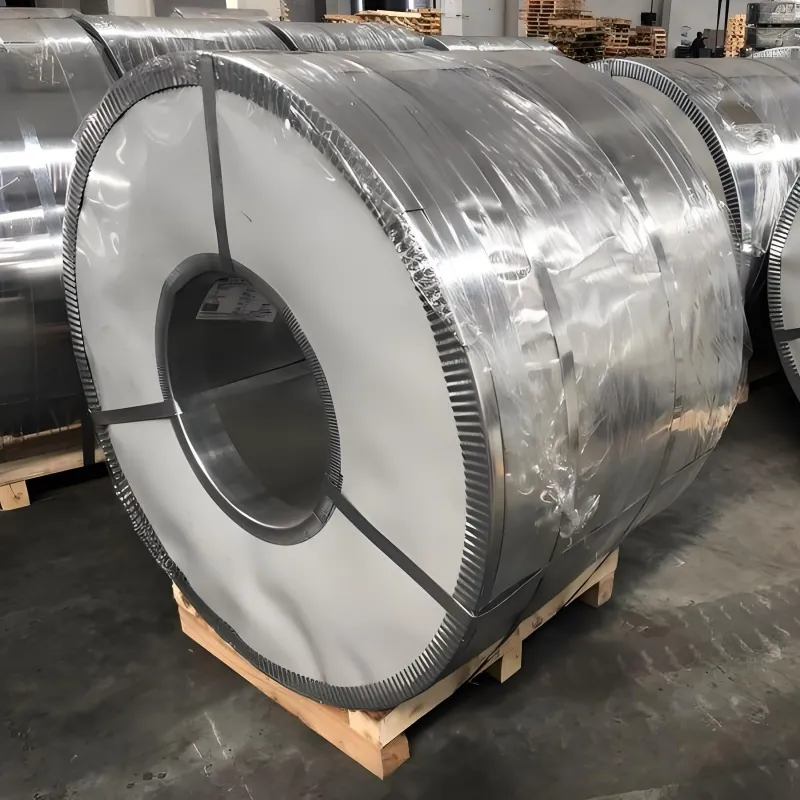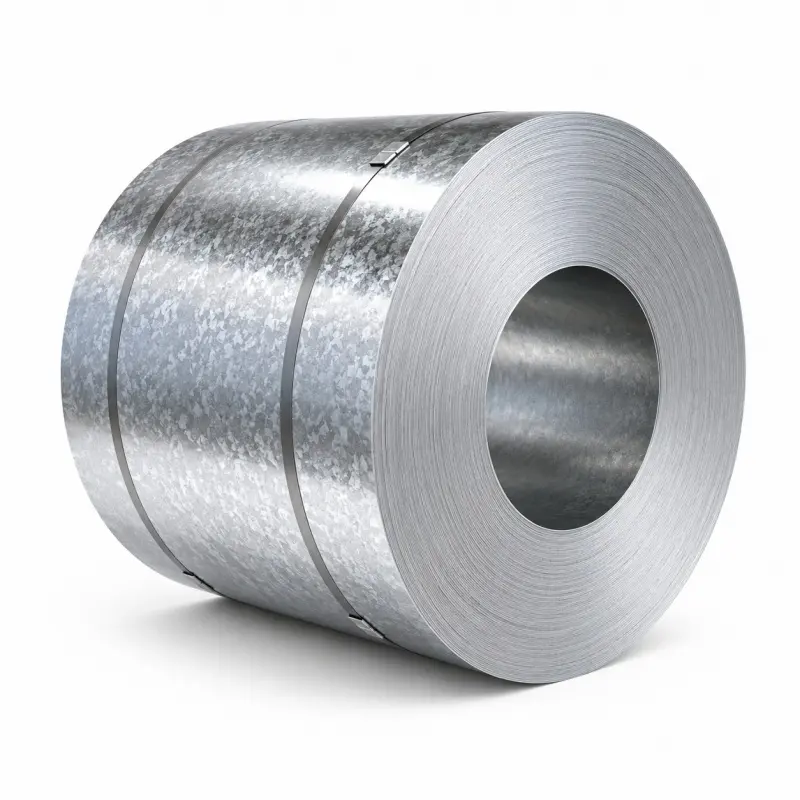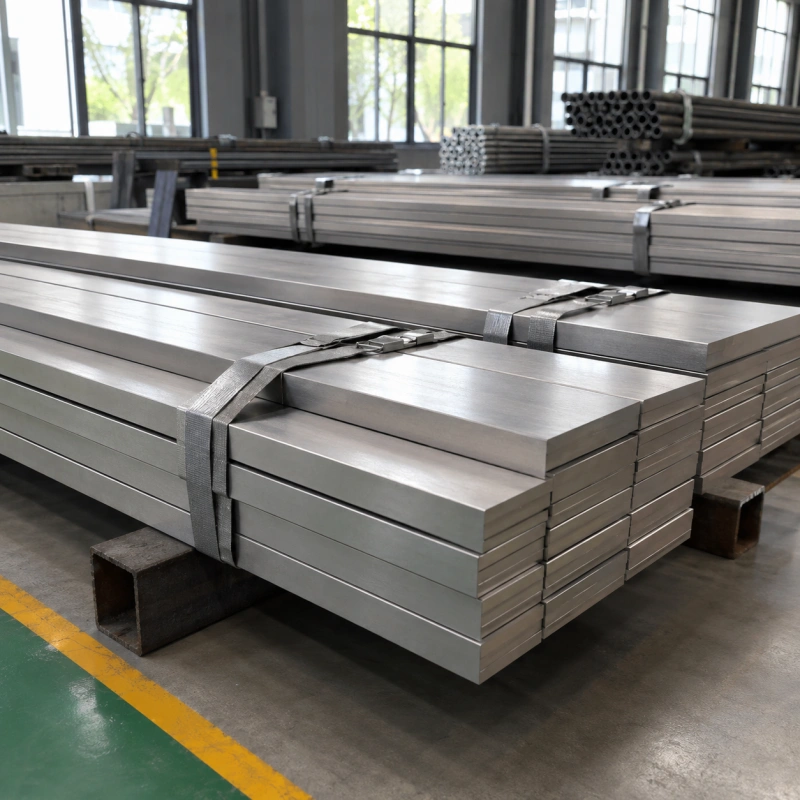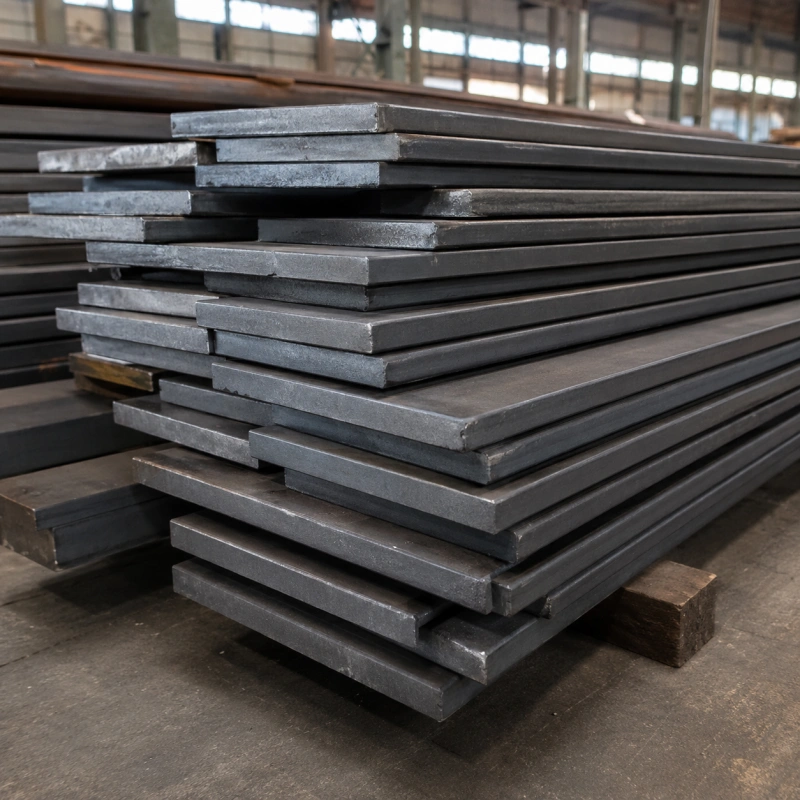
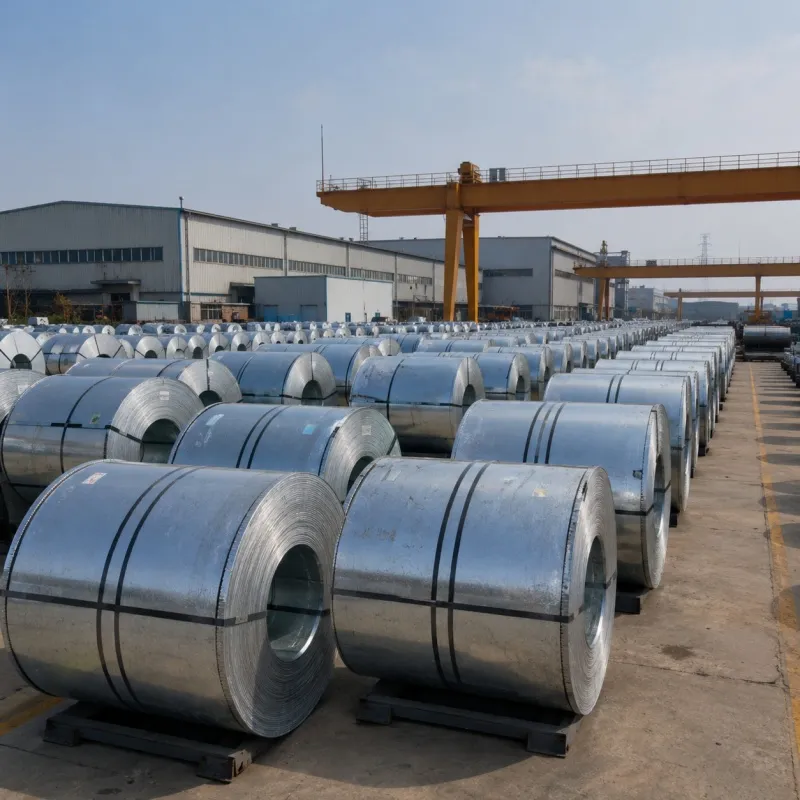
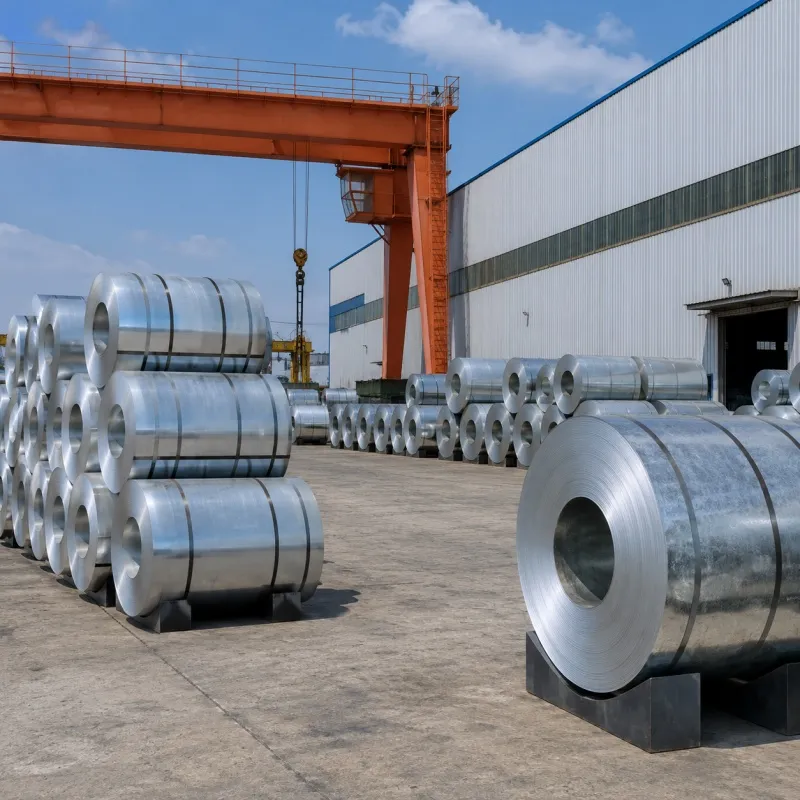
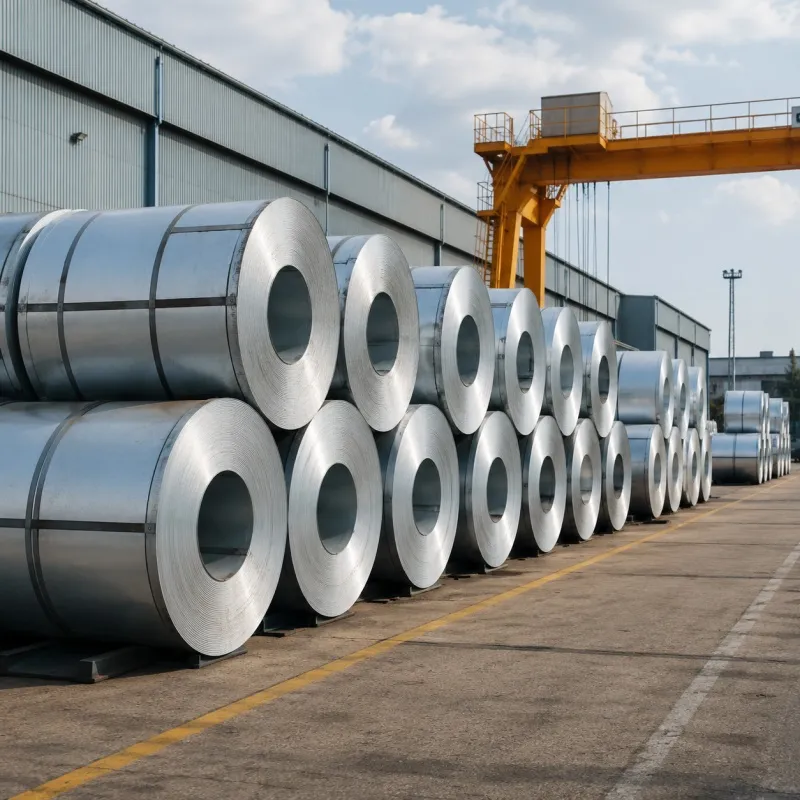
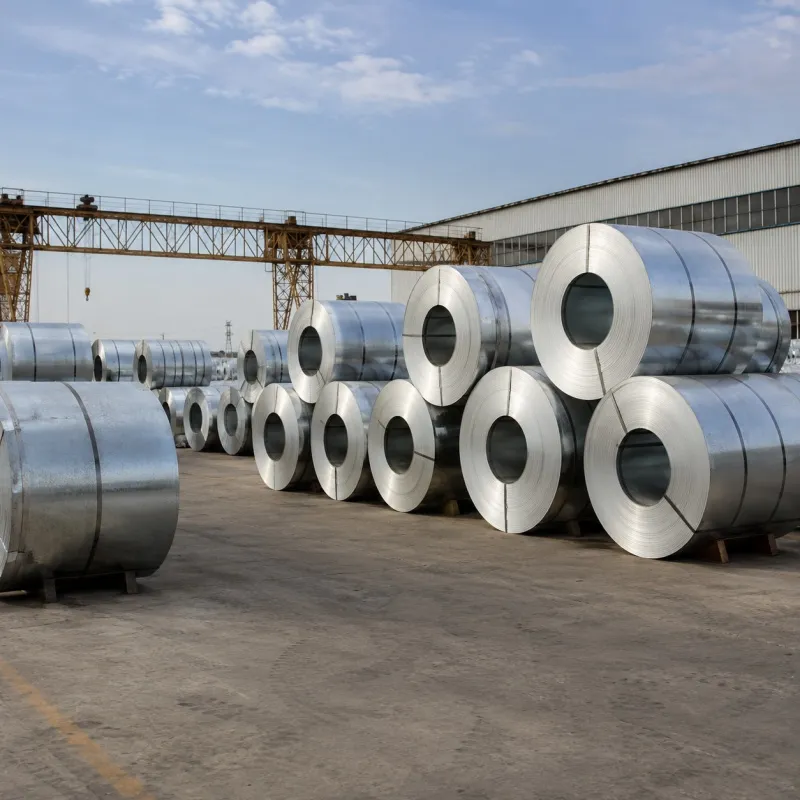
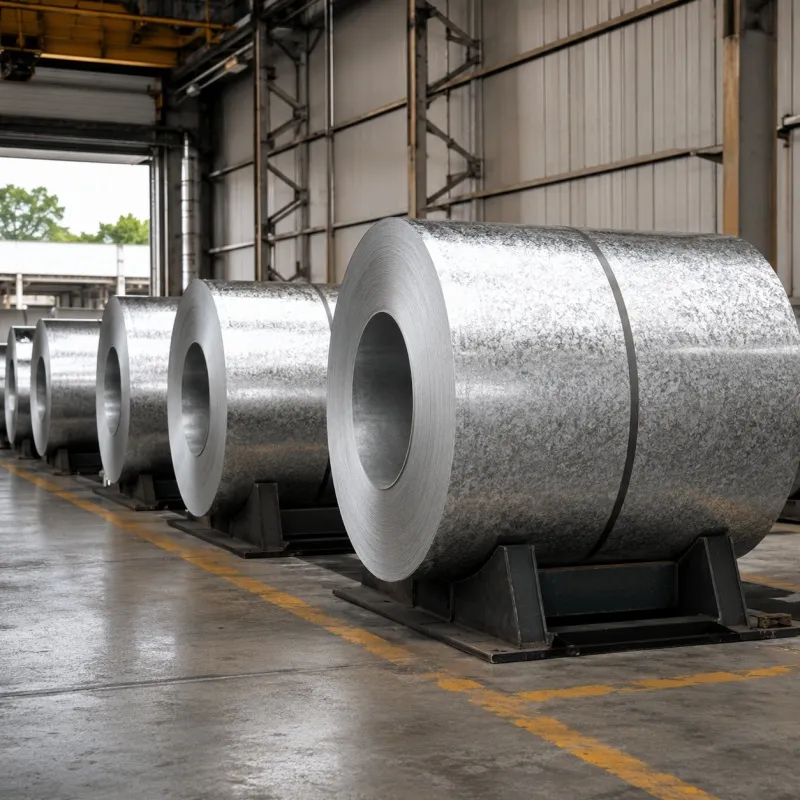
Hot-Dip GI Steel Coil – Zinc-coated steel for roofing, HVAC, roll forming and fabrication.
Z30–Z275 Options – Low to heavier zinc coating levels available according to project requirements.
Double & Differential Coating – Standard double-sided and selected unequal-side coating specifications supported.
Custom Coil Specifications – Thickness, width, spangle, surface treatment, ID and coil weight can be customized.
Complete Export Documents – MTC, COO and full commercial and shipping documentation available.
GI Steel Coil is carbon steel protected by a metallic zinc coating, most commonly applied through a continuous hot-dip galvanizing process. The zinc layer helps slow corrosion of the underlying steel while maintaining the strength, formability and processing characteristics required for industrial manufacturing.
Henan GDD supplies GI coils for roofing-sheet manufacturers, HVAC fabricators, roll-forming factories, steel distributors, appliance producers and general metal-processing companies.
Instead of treating all galvanized coils as the same product, we review the base steel grade, actual thickness, zinc coating mass, spangle, surface treatment, coil dimensions and downstream process together. These parameters often have a greater effect on production performance than the commercial term "GI Coil" alone.
| Item | Specification |
|---|---|
| Product Name | GI Steel Coil / Hot-Dip Galvanized Steel Coil |
| Base Steel | Cold Rolled or Suitable Hot Rolled Carbon Steel Substrate |
| Common Grades | DX51D+Z, DX52D+Z, DX53D+Z, DX54D+Z, S250GD+Z, S280GD+Z, S320GD+Z, S350GD+Z, SGCC, SGCH, ASTM A653 Grades or Equivalent |
| Common Standards | EN 10346, ASTM A653/A653M, JIS G3302, GB/T 2518 or Customer Specification |
| Thickness | Approximately 0.12 – 4.0 mm or Customized According to Grade and Mill Capability |
| Width | Typically 600 – 1500 mm or Customized |
| Commercial Zinc Coating Range | Approximately 30 – 275 g/m² Total Both Sides or Customized; Standard Designations Depend on Applicable Specification |
| Common Coating References | Z30, Z40, Z60, Z80, Z100, Z120, Z140, Z180, Z200, Z225, Z275 or Agreed Coating Mass |
| Coating Configuration | Standard Double-sided Coating / Differential Coating / Special Single-side Requirement Subject to Mill Confirmation |
| Spangle | Regular Spangle, Minimized Spangle, Zero Spangle or Agreed Surface Appearance |
| Surface Treatment | Passivated, Cr(VI)-free Passivated Where Required, Oiled, Dry, Anti-fingerprint or Customized |
| Coil ID | 508 mm / 610 mm or Customized |
| Coil Weight | Typically 3 – 10 MT or Customized According to Uncoiler and Handling Capacity |
| Edge | Mill Edge / Slit Edge |
| Processing | Slitting, Cut-to-length, Corrugating, Roll Forming and Customized Processing |
| Applications | Roofing Sheets, HVAC Ducts, Wall Panels, Steel Framing, Roll-formed Profiles, Appliances and General Fabrication |
| Inspection | Thickness, Width, Zinc Coating, Surface Condition, Mechanical Properties, Coil Identification and Third-party Inspection Where Required |
| Available Documents | MTC, Certificate of Origin, Export License Where Applicable, Commercial Invoice, Packing List, Bill of Lading and Customs Documents |
| Packing | Waterproof Wrapping, Protective Steel Sheet, Edge Protectors, Steel Straps and Seaworthy Export Packing |
| Trade Terms | EXW, FOB, CFR, CIF |
Zinc coating terminology can vary between standards and mills. Commercial terms such as Z30 or Z40 should therefore be confirmed together with the actual coating mass in g/m², whether the value refers to total coating on both surfaces, and the applicable inspection standard.
GI is a widely used commercial abbreviation for galvanized steel. In the coil and sheet industry, GI normally refers to steel that has received a zinc coating, most commonly through continuous hot-dip galvanizing.
The zinc coating creates a physical barrier between the steel substrate and the environment. Zinc can also provide sacrificial protection around small exposed areas, helping slow corrosion of the underlying steel.
GI Steel Coil and Galvanized Steel Coil therefore refer to essentially the same general product category. For actual procurement, the important information is the grade, dimensions, coating mass, surface condition and processing requirement.
On a continuous hot-dip galvanizing line, prepared steel strip passes through a molten zinc bath. When the strip exits the bath, controlled air knives remove excess zinc and regulate coating mass before solidification.
Production parameters influence coating uniformity, spangle appearance and final surface condition. The strip can then receive additional passivation, oiling or anti-fingerprint treatment before inspection and recoiling.
For most commercial GI coils, both the upper and lower surfaces of the steel strip receive zinc coating during this process.
Double-sided galvanizing is the normal configuration for most hot-dip GI Steel Coil.
Both surfaces receive zinc so that the steel is protected on the front and back sides. For an equal-coated product, the coating mass is approximately distributed across the two surfaces, subject to normal production variation and standard tolerances.
When a commercial specification states Z100 as a total coating mass of 100 g/m², an approximately equal-coated product would correspond to roughly 50 g/m² of zinc on each surface.
This does not mean that each side independently contains 100 g/m². Buyers should confirm whether the quoted value is total both-side coating or per-side coating before placing an order.
True single-sided galvanized steel means that zinc coating is intentionally concentrated on only one surface while the opposite surface is left uncoated or receives a different treatment.
This is much less common than conventional double-sided hot-dip GI coil and should not be assumed to be available on every continuous galvanizing line.
A buyer requesting single-side galvanizing should clearly state the required coating mass on the zinc-coated side and the required condition of the opposite surface.
Depending on the specification, mill and end use, another coating route such as electrogalvanizing or a special differential-coating process may be more suitable. Availability should be confirmed before quotation.
Double-sided GI provides zinc protection on both surfaces and is the standard choice for roofing, HVAC, framing and general fabrication.
Single-sided coating is mainly considered when one surface needs zinc protection while the opposite side will undergo another coating, bonding or specialized manufacturing process.
For normal construction and outdoor fabrication, double-sided coating is usually more practical because both surfaces can be exposed to moisture during storage, processing or service.
Differential coating is different from both conventional equal coating and true single-side galvanizing.
Both surfaces remain zinc coated, but one side intentionally receives a different coating mass from the other. A project might, for example, require a heavier zinc layer on the exposed surface and a lighter coating on the protected side.
Differential hot-dip coating is a specialized specification and is not available from every mill or for every dimension.
If unequal coating is required, the purchase specification should state the target coating on Side A and Side B separately rather than using only a general Z designation.
In many export quotations, Z30 is used commercially to describe approximately 30 g/m² of total zinc coating across both surfaces.
If the coating is distributed approximately equally, this corresponds to about 15 g/m² on each side.
Using a zinc density of approximately 7.14 g/cm³, 15 g/m² represents an average metallic zinc thickness of roughly 2.1 micrometres per side.
Z30 is a relatively light coating and is generally considered for cost-sensitive or relatively protected applications. It should not be selected for demanding outdoor corrosion exposure solely because it has a galvanized appearance.
Z30 is also not a universally standardized coating class under every international galvanized-steel standard. The actual g/m² requirement should be written clearly in the purchase order and confirmed on the relevant production documentation.
Z40 is commonly used in international commercial quotations to indicate approximately 40 g/m² total zinc coating across both sides.
For an approximately equal-coated product, this would be around 20 g/m² per side, corresponding to roughly 2.8 micrometres of zinc per surface.
Like Z30, Z40 represents a relatively light zinc coating. It can be suitable for selected indoor, protected or downstream-manufacturing applications where heavy corrosion protection is not required.
Buyers should confirm the actual coating measurement requirement rather than relying only on the shorthand Z40 designation.
Z100 is commonly understood under EN-style coating terminology as a nominal total zinc coating mass of approximately 100 g/m² across both surfaces.
For approximately equal coating, this means around 50 g/m² per side, or roughly 7 micrometres of metallic zinc per surface.
Z100 is commonly requested for general construction, roofing components, fabrication and other applications requiring more corrosion protection than very light commercial coatings such as Z30 or Z40.
Actual minimum coating requirements and testing methods should always follow the specified material standard.
Z275 represents a substantially heavier zinc coating than Z30, Z40 or Z100.
Under commonly used EN-style terminology, Z275 corresponds to a nominal total coating mass of approximately 275 g/m² across both surfaces.
If approximately equally distributed, this is about 137.5 g/m² per side, equivalent to roughly 19 micrometres of zinc on each surface.
Z275 is often specified where greater atmospheric corrosion protection is needed, although service life still depends on humidity, pollutants, salt exposure, cut edges, forming damage and maintenance.
Buyers frequently see Z30, Z40, Z60 and similar descriptions in commercial quotations from steel suppliers.
These values are useful for communicating coating mass, but not every number is necessarily a formal coating designation listed in every international standard.
For example, EN-based specifications commonly use defined coating classes such as Z100, Z140, Z200, Z225 and Z275 for relevant products, while ASTM A653 uses a different coating designation system such as G30, G60 and G90.
Z40 and ASTM G40 are therefore not the same terminology and should never be treated as automatically equivalent.
Zinc coating for GI coil is normally specified by coating mass in grams per square metre rather than directly by micrometre thickness.
Because metallic zinc has a density of approximately 7.14 g/cm³, coating mass can be converted into an approximate physical thickness.
For example, an equal-coated Z100 product has approximately 50 g/m² per side, giving an average zinc thickness of roughly 7 μm per side. Z275 gives approximately 19 μm per side when the coating is distributed evenly.
These values are useful engineering estimates rather than substitutes for the inspection methods and tolerances defined by the applicable product standard.
Choosing the highest available zinc coating is not always the most economical solution.
Indoor ventilation components, warehouse panels, protected structural parts and exposed outdoor roofing do not experience the same corrosion environment.
A buyer should consider expected exposure, required service life, downstream forming, painting, maintenance and project specification before selecting the zinc coating.
For regulated or engineered projects, the required coating should always follow the project documentation rather than being reduced simply to lower material cost.
DX51D+Z is widely used for general forming and fabrication under European galvanized-steel specifications.
Typical applications include roofing sheets, wall panels, ventilation components and roll-formed products where severe deep drawing is not required.
The "+Z" designation identifies zinc coating. The final purchase specification should also state coating class, surface condition, treatment, dimensions and other required properties.
More formable DX-series grades can be considered where downstream manufacturing requires more demanding bending, drawing or shaping.
Selecting a more formable grade can reduce the risk of cracking or unstable forming in components with complex geometry.
The appropriate grade should be selected according to the actual forming process rather than simply specifying DX51D for every galvanized component.
SGCC is a commonly traded JIS galvanized-steel designation used for construction and general manufacturing.
Buyers often specify SGCC together with thickness, width, coating mass, spangle and surface treatment.
SGCC and DX51D are sometimes treated as approximate commercial alternatives, but they belong to different standard systems. Mechanical and dimensional requirements should be reviewed before substitution.
S250GD, S280GD, S320GD and S350GD are examples of galvanized structural grades used where defined strength is more important than general drawing performance.
These grades can be used for roll-formed structural profiles, framing and selected building components.
Final material selection should follow the structural design, required yield strength, profile geometry and forming capability.
Regular spangle has visible zinc crystallization across the galvanized surface.
It provides the familiar traditional appearance associated with hot-dip galvanized steel and is frequently used for general roofing, fabrication and applications where the metallic surface remains visible.
Spangle size and visual pattern can vary between production lines and batches, so strict appearance requirements should be confirmed through an agreed sample.
Zero or minimized spangle provides a visually smoother and more uniform galvanized surface.
It is often preferred for HVAC, appliances, cabinets and products that will later receive paint or another finishing layer.
Zero spangle does not mean zero zinc coating. The term describes the visible crystallization pattern of the galvanized surface.
Roofing manufacturers convert galvanized master coils into corrugated, trapezoidal and other profiled sheets through continuous roll-forming lines.
Important purchasing parameters include actual thickness, width, zinc coating, steel grade, spangle and coil weight.
Coil weight should be matched with the capacity of the customer's decoiler. A technically correct coil can still create a production problem if it is too heavy for the line.
Galvanized steel is widely used for rectangular and round ventilation ducts.
HVAC manufacturing involves cutting, bending, folding and lock forming, so buyers often prioritize stable thickness, good flatness, clean surfaces and reliable forming performance.
For indoor ductwork, the required coating level may differ considerably from steel intended for exposed outdoor construction.
GI coils can be roll formed into studs, tracks, channels, purlins, cable trays and other continuous profiles.
Steel strength, elongation, thickness and zinc coating should be considered together because they influence forming behavior and finished profile performance.
Narrow slit coils can be supplied according to the customer's required profile width and roll-forming equipment.
Appliances, cabinets, electrical enclosures and equipment housings often require a cleaner and more uniform galvanized surface than basic construction products.
Zero spangle, anti-fingerprint treatment and tighter surface-quality requirements can be considered for these applications.
When the galvanized surface will later be powder coated or painted, downstream coating compatibility should also be considered.
GI Steel Coil uses zinc as its principal protective metallic coating and normally has a silver-gray appearance.
PPGI is prepainted galvanized steel. It uses galvanized steel as the substrate and adds primer and colored top-coat systems before delivery.
GI is suitable when the customer needs a metallic galvanized finish or plans to perform additional fabrication and coating. PPGI is generally selected when a finished factory-applied color is required.
GI uses a zinc-based metallic coating, while Galvalume or Aluzinc normally uses an aluminum-zinc alloy coating.
The two products differ in coating chemistry, appearance, corrosion behavior and downstream characteristics.
Selection should be based on the application and project specification instead of assuming one coating is universally superior.
Galvanized steel can develop white corrosion products when moisture becomes trapped against the zinc surface with insufficient ventilation.
This can occur during ocean transportation, condensation or improper warehouse storage.
GI coils should therefore be stored indoors where possible, kept dry and protected from rapid temperature changes that can cause condensation.
Passivation and oiling can reduce storage risk, but they do not replace appropriate handling and storage practices.
A quotation of Z100 commonly refers to approximately 100 g/m² total across both surfaces, not 100 g/m² on each surface.
These designations belong to different commercial or standards systems and should not be treated as equivalent without conversion and specification review.
Two coils with the same thickness can have different steel strength, coating mass, formability and surface quality.
The customer's crane, forklift and decoiler capacity should be checked before final coil weight is confirmed.
A complete inquiry should state the required standard, steel grade, thickness, width, zinc coating and quantity.
Buyers should also specify regular or zero spangle, surface treatment, coil ID, preferred coil weight and destination port.
If single-side or differential coating is required, Side A and Side B coating requirements should be written separately.
Customers replacing an existing supplier can send the current MTC or purchase specification for comparison before quotation.
A typical metal fabricator producing protected indoor components may prioritize cost, formability and surface appearance rather than maximum corrosion protection.
For this type of project, a relatively light commercial zinc coating such as Z30 or Z40 may be discussed when allowed by the customer's specification.
The buyer should still confirm the actual coating mass in g/m² rather than relying only on the shorthand designation.
A roofing-sheet manufacturer may purchase DX51D+Z coils with a specified width, approximately Z100 coating and controlled coil weight for its corrugating line.
Consistent thickness and width are important because variation can affect roll-forming setup and finished sheet dimensions.
A manufacturer producing outdoor framing or exposed building components may require a heavier zinc coating such as Z275 according to the project specification.
In this application, coating mass is selected together with steel strength, forming requirements and expected environment rather than considered independently.
These examples describe typical procurement scenarios. Customer names, confidential prices and proprietary specifications are not published without authorization.
Repeat GI coil buyers generally focus on consistency between shipments.
Common concerns include actual thickness, width tolerance, zinc coating level, spangle appearance, forming behavior, coil weight and packing condition.
Clear coil identification and matching MTC documentation also help simplify incoming inspection and warehouse traceability.
GI Steel Coil inspection can include thickness, width, surface condition, coating specification, mechanical properties and coil identification according to the purchase specification.
Surface inspection checks for excessive scratches, dents, exposed substrate, edge damage, oxidation and other visible conditions.
Zinc coating can be checked using the method specified by the applicable standard or contract.
Product photographs, coil-label photographs, packing photographs and container-loading photographs can be supplied according to customer requirements.
The Mill Test Certificate provides an important reference for confirming the actual steel and coating specification supplied.
Depending on the mill and material standard, the MTC can include steel grade, dimensions, coating designation, chemical composition, mechanical properties and production identification.
Coil numbers and labels help connect the delivered material to the corresponding production documentation.
Customers requiring particular certificate information should state this requirement before order confirmation.
Independent third-party inspection can be arranged according to the agreed purchase-contract scope.
Inspection can include dimensions, surface appearance, coating information, material identification, quantity, documentation, packing and loading.
If additional laboratory testing is required, the testing method, sampling plan and acceptance criteria should be confirmed before production.
Henan GDD supports international GI coil shipments with technical, commercial and customs documentation prepared according to contract and destination requirements.
Available documents can include MTC, Certificate of Origin, export license where applicable, commercial invoice, packing list, bill of lading and customs declaration documents.
Inspection records, product photographs, packing photographs and container-loading photographs can also be provided according to agreed requirements.
Destination-specific legalization, chamber endorsement and additional import documents should be confirmed before order placement.
GI coils require protection from moisture, edge impact and movement during long-distance transportation.
Export packing can include waterproof wrapping, protective steel sheets, inner and outer edge protectors, steel straps and suitable supporting skids.
Coil labels can show grade, dimensions, coating, coil number, net weight, gross weight and customer shipping marks.
Container loading should account for individual coil weight and safe weight distribution.
Henan GDD supplies GI Steel Coil to roofing manufacturers, HVAC companies, roll-forming factories, steel distributors and industrial fabricators.
We support multiple steel grades together with customized thickness, width, zinc coating, surface appearance, coil ID and coil weight.
For customers comparing Z30, Z40, Z100 or Z275 products, we can review the actual coating requirement in g/m² to reduce confusion between commercial terminology and formal standards.
Existing MTCs and purchase specifications can be reviewed before quotation to improve material matching.
MTC, Certificate of Origin, export license where applicable and complete commercial and shipping documentation can be supplied according to contract requirements.
GI Steel Coil is zinc-coated carbon steel, normally produced through continuous hot-dip galvanizing for corrosion protection and downstream fabrication.
Standard hot-dip GI coil is normally zinc coated on both surfaces. Single-side or differential coating is a special requirement and should be confirmed separately.
Normally no. Under commonly used EN-style terminology, Z100 refers to approximately 100 g/m² total zinc coating across both surfaces, subject to the applicable standard.
Z30 is commonly used commercially for approximately 30 g/m² total zinc coating. Because it is a light coating and is not a formal coating class in every standard, the exact g/m² requirement should be confirmed in the order.
Z40 generally indicates a lighter commercial zinc coating than Z100. Z100 provides substantially more zinc per square metre and therefore more available metallic zinc for corrosion protection under otherwise comparable conditions.
Yes. Z275 can be supplied for suitable grades and dimensions subject to mill capability and order requirements.
Yes. MTC, Certificate of Origin, export license where applicable, commercial invoice, packing list, bill of lading and other agreed export documents can be provided.
Please provide standard, grade, thickness, width, zinc coating in g/m², spangle, surface treatment, coil ID, preferred coil weight, quantity, destination port and required documentation.
Looking for GI Steel Coil for roofing, HVAC ducts, roll-forming, steel framing or industrial fabrication?
Send Henan GDD your required steel grade, thickness, width, zinc coating, spangle, surface treatment, coil ID, coil weight, quantity, destination port and documentation requirements.
If your current specification only states Z30, Z40, Z100 or another commercial coating designation, you can also send the existing MTC or supplier specification. We can review whether the stated number refers to total both-side coating, per-side coating or another coating system before quotation.