

Oil Casing vs. Petroleum Cracking Pipe: Uses, Standards and Testing
Summary: Oil casing supports and isolates a wellbore, while petroleum cracking pipe serves specified refinery and petrochemical duties. Learn how their materials, manufacturing routes and inspection requirements differ, and what to check when comparing Chinese, American and European specifications.
Tags: Oil Casing, Petroleum Cracking Pipe, API 5CT, GB/T 9948, GB/T 19830, EN 10216, Seamless Steel Pipe, OCTG, Pipe Testing, GDD Metal
Two steel pipes can look similar and still have very different jobs. Oil casing is selected for well construction and integrity; petroleum cracking pipe is selected for process equipment and piping duties. Choosing either product requires a defined standard, grade, dimensions, delivery condition and inspection plan. A black coating, shiny surface or heavy wall cannot establish suitability.
What Is Oil Casing?
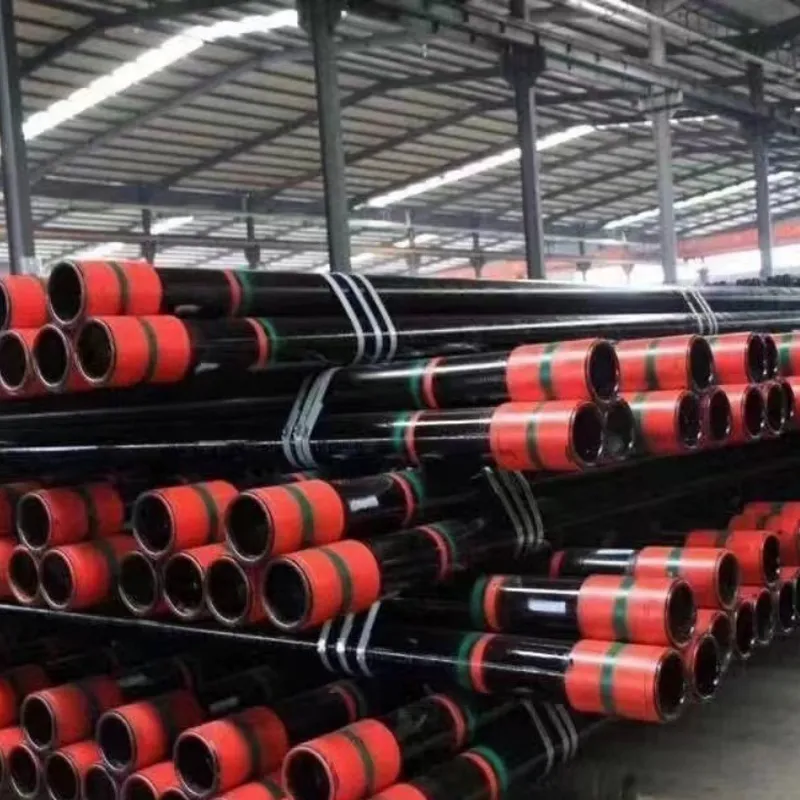
Oil casing is a pipe string installed in a drilled well to help stabilize the borehole and, together with cement and other well components, isolate formations and contain fluids. Surface, intermediate and production casing serve different positions and duties in the well. Casing belongs to oil country tubular goods, commonly abbreviated as OCTG.
The casing designer considers external collapse pressure, internal pressure, axial load, connections, corrosion and installation conditions. Common specification grades include J55, K55, N80, L80 and P110. Grade names alone do not determine a safe working pressure or sour-service capability. Production tubing, normally installed inside casing to carry produced fluids, is a separate component.
What Is Petroleum Cracking Pipe?
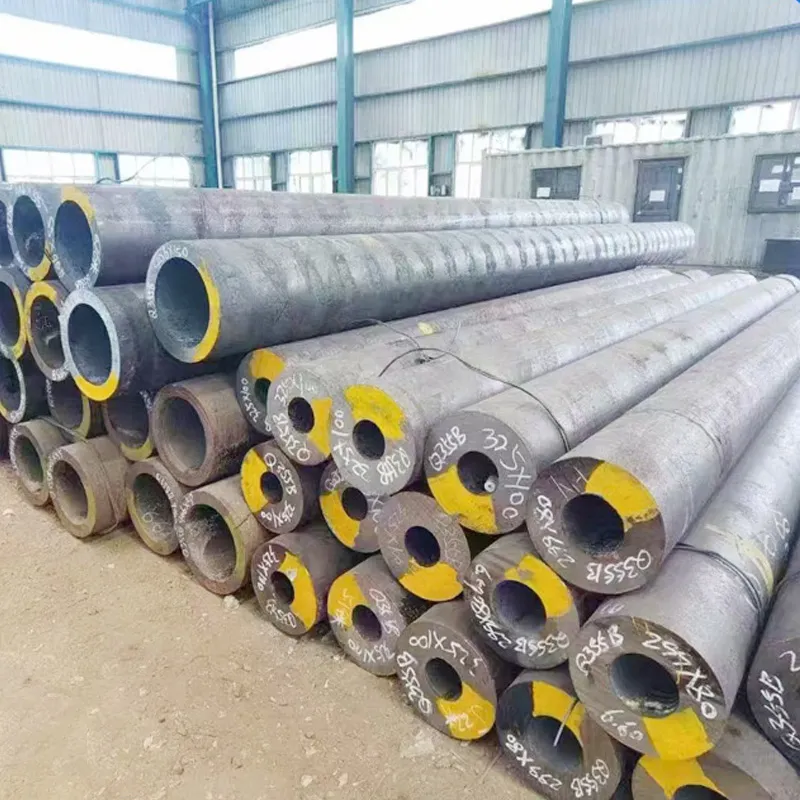
Petroleum cracking pipe is a commercial term widely used for seamless steel tubes and pipes supplied for refinery and petrochemical applications. Depending on the approved material and equipment design, these may serve process piping, heat exchangers and selected furnace duties. “Cracking” refers to the industrial conversion process; it does not mean the pipe contains cracks.
The Chinese standard historically associated with this name was GB/T 9948-2013. It has been replaced by GB/T 9948-2025, Seamless steel tubes and pipes for petrochemical and chemical facilities, effective January 1, 2026. The new standard also replaces GB/T 6479-2013, GB/T 24592-2009 and GB/T 33167-2016. New inquiries should state the required edition rather than assume an older designation remains current.
Material selection depends on metal temperature, pressure, corrosion mechanisms, hydrogen exposure and required life. Carbon steel, alloy steel and stainless steel can serve different duties. Severe cracking-furnace coils may require specialized heat-resistant alloys or cast tubes outside an ordinary seamless-pipe offer.
How Do They Differ from Ordinary Steel Pipes?
Compared with galvanized pipe: galvanizing describes a zinc surface coating, commonly applied to carbon steel. It can improve corrosion protection in suitable environments, but it does not establish casing collapse resistance, connection performance or high-temperature process suitability. Casing and refinery pipes are normally specified by their engineering duty and material standard, with surface protection chosen separately.
Compared with carbon steel pipe: carbon steel describes the material family. Some oil casing and petroleum cracking pipes are themselves carbon steel products. The distinction is their specified chemistry, mechanical properties, heat treatment, tolerances, testing and intended service. General structural or utility pipe is not an automatic substitute for qualified OCTG or pressure pipe.
Compared with stainless steel pipe: stainless steel describes a corrosion-resistant alloy family. Stainless or corrosion-resistant alloys may be used for certain well or refinery duties, but an ordinary 304 or 316 pipe does not automatically meet a casing or furnace specification. Corrosion resistance, elevated-temperature performance and connection requirements must be evaluated separately.
For related supply categories, see GDD’s carbon steel seamless pipes and stainless steel products.
Chinese, American and European Standards: What Changes?
Casing standards: API Specification 5CT is widely used internationally. Its 11th edition was published in December 2023; buyers should identify applicable addenda and errata. China’s GB/T 19830-2023 is a modified adoption of ISO 11960:2020. In Europe, EN ISO 11960 is the corresponding adopted standard; BSI lists BS EN ISO 11960:2021 as identical to ISO 11960:2020. These publication dates and adoption relationships matter when reviewing compliance.
Thread geometry and gauging require a separate reference, commonly API 5B for covered API connections, or the connection owner’s specification for proprietary connections. API 5CT’s 11th edition removed the former PSL classifications, so old PSL1/PSL2/PSL3 ordering templates should not be copied into a new-edition purchase order without review.
Refinery and petrochemical pipe standards: GB/T 9948-2025 is a Chinese product specification. In American specification systems, ASTM A106/A106M covers seamless carbon steel pipe for elevated-temperature duties, ASTM A335/A335M covers seamless ferritic alloy steel pipe, and ASTM A213/A213M covers specified boiler, superheater and heat-exchanger tubes. European projects may specify EN 10216-2 for seamless non-alloy and alloy steel pressure tubes with elevated-temperature properties, or EN 10216-5 for stainless steel pressure tubes.
These standards are not interchangeable grade lists. A proposed substitute needs a documented comparison of chemistry, heat treatment, strength at the relevant temperature, toughness, dimensions, tolerances, inspection and design-code acceptance. A material certificate to one standard does not establish dual certification.
Also distinguish product specifications from design and dimensional standards: ASME B31.3 addresses process piping, while ASME B36.10 standardizes wrought steel pipe dimensions. Neither replaces the ordered material specification. An EN 10204 inspection certificate identifies inspection documentation; it is not a material grade or an operating-pressure rating.
How Are Oil Casing and Petroleum Cracking Pipes Manufactured?
Seamless casing route: steelmaking and billet preparation are followed by heating, piercing, rolling and sizing. Grade-specific heat treatment develops the required properties; subsequent operations include straightening, cutting, inspection and end finishing. Threaded-and-coupled casing also requires thread machining, gauging, coupling assembly and protection.
Electric-welded casing route: where permitted by the ordered grade and specification, steel strip is formed into a tube and its longitudinal edges are electrically welded. Weld processing, heat treatment and inspection must meet the casing requirements. Therefore, “oil casing” does not always mean “seamless.”
Seamless petrochemical pipe route: a heated billet is pierced and rolled or otherwise hot formed. Cold drawing or cold rolling may follow when dimensions and surface requirements call for it. The pipe then receives the specified heat treatment, straightening, end preparation and inspection. Normalizing, tempering, quenching and tempering, or solution treatment are selected according to the actual alloy and delivery specification; no single heat-treatment cycle applies to every product.
Cold finishing is a processing step, not evidence that a tube is inherently stronger or more suitable for refinery service. Final material condition and verified properties govern acceptance.
How Should These Pipes Be Tested?
The purchase specification and approved inspection plan determine mandatory tests, sampling frequency, methods and acceptance limits. A practical review covers:
- Identity and chemistry: verify heat numbers, chemical analysis and traceability. Positive material identification can supplement alloy verification, but does not replace a complete certificate.
- Dimensions and surface: check outside diameter, wall thickness, length, ovality, straightness, ends and visible imperfections. Casing also requires the specified drift check to verify bore clearance.
- Mechanical properties: tensile testing establishes yield strength, tensile strength and elongation. Hardness, impact, flattening, bend or other tests apply according to grade, size, manufacturing route and order requirements.
- Nondestructive examination: specified ultrasonic, electromagnetic or other approved methods detect relevant imperfections. Method, coverage, reference sensitivity and acceptance criteria must be defined.
- Pressure integrity: perform hydrostatic testing or the expressly permitted alternative under the applicable standard and purchase order. Internal hydrostatic testing does not by itself prove casing collapse resistance or establish a design working pressure.
- Connections and service qualification: inspect thread geometry and gauges for casing. Sour-service, corrosion, microstructure or elevated-temperature assessments may be required separately; these are not automatically routine tests on every pipe.
For H2S-containing production environments, material selection may invoke ISO 15156/NACE MR0175. Refinery sour-service requirements have a different scope, including ISO 17945/NACE MR0103 where applicable. “Petroleum cracking pipe” alone does not certify resistance to sulfide stress cracking, hydrogen damage or every refinery corrosion mechanism.
Product Specification Checklist
The entries below describe information to confirm with GDD Metal. They are not a guarantee of stock availability or automatic equivalence between standards.
| Parameter | Oil casing | Petroleum cracking / petrochemical pipe |
|---|---|---|
| Primary duty | Wellbore support, isolation and pressure containment | Specified refinery piping, heat-exchanger or equipment duty |
| Specification route | API 5CT, GB/T 19830 or EN ISO 11960 as ordered | GB/T 9948-2025, or project-approved ASTM/EN specification |
| Material selection | Examples: J55, K55, N80, L80, P110; confirm type and condition | Carbon, alloy or stainless grade selected for temperature, pressure and medium |
| Dimensions | Outside diameter, wall or nominal mass, length range and drift | Outside diameter × wall thickness or NPS × schedule; required length |
| Manufacture | Seamless or permitted electric-welded route | Seamless hot-finished or cold-finished route as specified |
| Ends and delivery | Plain ends or specified threads, couplings and protectors | Plain or beveled ends; heat treatment and preservation as ordered |
| Records | MTC, inspection results and connection documentation as agreed | MTC, heat-treatment and inspection records as agreed |
Source Oil Casing and Petroleum Cracking Pipe from GDD Metal
Henan GDD Metal Materials Co., Ltd. supplies API 5CT oil casing and petroleum cracking and petrochemical seamless pipe. We can review the required standard, grade, dimensions, delivery condition, end preparation and inspection documentation before quotation. Mill test certificates, agreed third-party inspection and export documentation can be coordinated for the order.
Send your application, standard edition, grade, outside diameter, wall thickness, length, quantity, connection or bevel requirement, operating conditions and destination. If API Monogram products or particular mill approvals are required, state this at inquiry stage so the proposed manufacturer and license scope can be verified. Contact GDD Metal for a project-specific quotation.
Technical references: API 5CT and API 5B publications, ISO 11960, China’s official records for GB/T 19830-2023 and GB/T 9948-2025, ASTM product specifications, BSI’s EN 10216 and EN ISO 11960 records, and ASME piping standards. Standard status checked in October 2026; the contract must identify the applicable edition and requirements.